- -
- 100%
- +

© Albert Svetlov, 2026
ISBN 978-5-0069-9770-7
Создано в интеллектуальной издательской системе Ridero
Предисловие!
О, если бы вы знали, как я с некоторых пор ненавижу писать «Предисловия», сюсюкая и разъясняя случайному человеку, листавшему сайт и волею случая оказавшемуся на странице книги, которую вряд ли кто-то вообще купит, вещи, которые объяснять не хочу.
Я НЕНАВИЖУ ПИСАТЬ ПРЕДИСЛОВИЯ!
С каких это пор, может спросить озадаченный случайный читатель. Да, ёлы, с тех самых пор, когда опубликовал здесь «Перекрёстки детства», свой первый роман.
Но тогда иллюзии ещё кружили мою лысую голову, поэтому я стремился что-то объяснить, разъяснить и донести. С того времени минуло почти 10 лет и желание объяснять-разъяснять-доносить пропало напрочь.
В самом деле, на кой ляд утруждать себя выворачиванием души наизнанку, если в итоге всё равно нулевой результат. Совершенно верно, нет в этом никакого резона. Сплошная трата драгоценного времени и потуги разжевать читателю то, что не требует жевания. По мне так: есть продукт, в данном случае — сборник стихов и песен на английском языке, и есть тот, кто на него наткнулся. Интересно — прочитает и поймёт, поймёт по-своему, но в этом-то и прелесть. Не зацепит — закроет страничку, зевнёт и, тут же позабыв об увиденном, отхлебнёт чая. И он будет прав! Да-да, он будет прав. Это не его. Как любил повторять МихалНиколаич Задорнов: это не для толстолобиков. (Замечу, что всё только что написанное относится не только к данному сборнику, а вообще ко всему мною сочинённому).
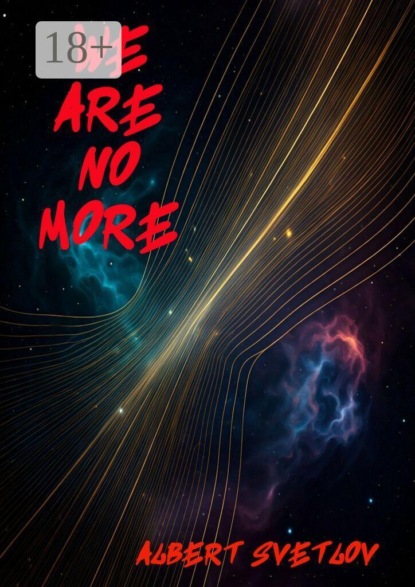
И вот какой бы лютой неприязнью я не пылал к предисловиям, но сборник «We are no more» в нём нуждается. Ибо совершенно не ясно, что и откуда взялось, к чему эти англицизмы у автора, ранее ни в чём подобном не замеченном. А посему, мысленно натянув на свои «нехотелки» смирительную рубашку, я вновь пускаюсь в пространные объяснения.
Не скрою, никакого сборника стихов на иностранных языках не планировалось. Опубликовав тексты в «Post mortem» я дал себе зарок больше ничего не писать. По целому ряду причин. В упомянутом перечне и то, что издательская платформа совершенно необоснованно сняла «Орфея неприкаянного» с публикации по цензурным соображениям (нет, ребят, там не имелось аморалки, там прослеживалась политическая позиция автора, а это сейчас не любят, от этого сейчас шарахаются, как от чумы), и то, что я в своих книгах уже сказал всё, что хотел сказать. Выдавливать из себя вторичные банальности, как из пустого тюбика выдавливают остатки пасты, не хотелось совершенно. Признаюсь, писательское ремесло мне стало не интересно.
Мысленно поставив на себе крест, как на авторе и журналисте, я стал больше времени уделять фотографии. Но тут… Но тут…
Осенью прошлого года, в один из чудесных сентябрьских деньков, брат прислал мне в замедляемом нынче мессенджере какую-то песню, сопроводив её примерно следующим комментарием: «Послушай, как круто написано. Это один дядька на свои стихи сделал на музыкальном сайте. У тебя же куча стихов, не хочешь попробовать?»
М-м-м, попробовать, знаете ли, я не хотел. Во-первых, не знал, что это за сайт, во-вторых. не особо доверял пресловутому ИИ, в-третьих, песня меня не впечатлила. Я отнекивался, мол «не знаю, что за сайт, как работает, да там, наверное, платно». Тогда братан не поленился и прислал ссылку. Ссылка вела на популярный нынче СУНО.
И всё заверте…
Сказать, что я оказался впечатлён возможностями бесплатной версии 3.5 — это не сказать ничего. Буквально за несколько дней я озвучил то, что нашёл в закромах более-менее рифмованного, а остальное стал подгонять под презираемый мною стиль рэп или хип-хоп.
Кому интересно ознакомиться с моими ранними музыкальными опытами, тот может перейти на мою страничку в ВК (Альберт Светлов, на аватарке такой лысый дедок с бородкой и наушниками на шее) и начать прослушивание с первого альбома «Рейс из осени».
Клепание песенок продолжалось месяца два. Когда собственные закрома опустели, я запустил ручонки в русскую классику.
Затем бесплатный доступ открыли к версии 4.5. И тут я окончательно прих… ошалел, в смысле. И оформил подписку на ПРО версию. Создания песен мне оказалось мало. СУНО постоянно лагало с ударениями, с акцентом и правильным произношением. Опытным путём не удалось свести к минимуму косяки с ударениями и произношением, но о данном опыте можно написать отдельный текст, чего в планах у меня нет.
Меня полностью подчинила себе идея создания инструментальной музыки. Вот где можно развернуться, не имея музыкального образования, полагал я. И в определённом смысле был прав. Хотя и при создании именно инструменталов есть свои подводные камни.
Идеями для инструментальных произведений послужили опубликованные здесь тексты. Мне давно не давала покоя мысль выражения текста в музыке. Хотелось передать в звуке заложенную в печатном слове идею и настроение, выразить текст в музыкальном впечатлении. Крайне интересный опыт, надо сказать. Учитывая, что к моменту написания сего «Предисловия!» я уже перевёл на язык музыки с помощью СУНО и «Перекрёстки детства», и «Целуя девушек в снегу», и «Орфея» и вообще всё, что разместил на данной платформе, и даже более, если брать черновики, которые не выросли в полноценные произведения.
Отдельного упоминания стоит крайне амбициозный проект по переводу на музыкальный язык семитомной эпопеи Марселя Пруста «В поисках утраченного времени». Труд, на который ранее никто не отваживался, отняла у меня массу времени, нервов и здоровья. Но он удалась. Не совсем так, как мне хотелось бы, но процентов на 90 точно.
Как-то проговаривая в беседе с подругой тему очередного альбома, я не один раз произнёс выражение «перевод на язык музыки», и тут мелькнула мысль, что ведь можно (и даже нужно!) перевести свои тексты (за исключением прозы) на иностранные языки и уже на эти получившие новую жизнь тексты создать песни.
Дело продвигалось тяжело. Приходилось не единожды переделывать переводы, затем писать под них промты для СУНО, отслушивать и в случае необходимости делать новый перевод и так далее. К слову, определённый стиль требует определённого перевода, то есть текст в стиле индастриал или хэви не прозвучит в инди или фолке.
Вот так постепенно и сложился сборник «We are no more». В него я включил стихи и песни, вошедшие в музыкальный альбом (174 песни!) «Time on the Tips of the Clock’s Hands». Доволен ли я новым сборником? Не на 100%. Тут есть, что править. Но, по большей части, он меня порадовал.
Под большей частью текстов я разместил примеры промтов для СУНО, если любопытно — смело пользуйтесь, экспериментируйте со своими стихами.
Фух! На этом, пожалуй, всё. Ведь я ненавижу писать предисловия!
PS. Да, чуть не забыл. Кому интересно всё, что связано с СУНО, музыкой и моими планами — кмон на мою страничку ВК, добавляйтесь в друзья и спрашивайте. Мой адрес: https://vk.com/svetlyakforte
We Are No More
It’s that simple… We are no more… Not listed anywhere… And the world rushes on, Choking on a hot dog as it runs, Washes it down with cola. A mundane fact That we are no more… It’s that simple… It’s that simple… We are no more… And the dates of life are now unreadable… Fewer reasons to remember those Lost between two epochs. Those who couldn’t take root in the Newest Time, Who didn’t forget themselves in youth. It’s that simple… And we are no more… We are no more… We melted like the first snowflakes. We are no more… We burned like black-and-white snapshots. We are no more… We left as unsolved riddles, sphinxes. We are no more… We rasp on worn-out discs. It’s that simple… We are no more… Without plastic wreaths and tearful epitaphs. We left as we lived, ignoring deadlines, Measured by crooked fortune-teller magpies. Without details, with quiet smiles. We hid inside the pages of slammed-shut books. It’s that simple… We are no more… It’s that simple… We are no more… We smile from the twenty-fifth frames Of a scratched grandfather’s film reel, And we sing along from tape recordings With three outlaw minor chords To which innocence was lost. It’s that simple… We are no more… We are no more… We melted like the first snowflakes. We are no more… We burned like black-and-white snapshots. We are no more… We left as unsolved riddles, sphinxes. We are no more… We rasp on worn-out discs. The wind blows out the gas lamps Of Proust’s regained time, Chases snowflakes of poplar fluff Through the deserted streets of ghostly Combray, Howls like a stray dog in an evil hour On the summer veranda of the Princesse de Guermantes. It beckons with a silver horn to the table The lost companies between the Volga and Vivonne. We are no more… We melted like the first snowflakes. We are no more… We burned like black-and-white snapshots. We are no more… We left as unsolved riddles, sphinxes. We are no more… We rasp on worn-out discs. We are no more… We are no more…The Weary Summer
The weary summer grants to us
In August days of thirty-five degrees.
The t-shirts, baseball caps and singlets fine —
We find ourselves in these.
And in a crowded summer cafe yard
You’ll always meet the ones you’re glad to see.
The weary summer is preparing
A parade of maple leaves for you and me.
The weary summer is preparing
A parade of maple leaves for you and me.
The beer debates with your old drinking friend
Are interrupted by a joyful, gentle rain.
A boy inside his open shirt unbuttoned
Offers us a heavy currant skein.
It’s easy breathing in this August air,
And it can fool you — it will always stay.
The weary summer, so audacious,
Won’t be the same another day.
The weary summer, so audacious,
Won’t be the same another day.
And this, our summer, has now filled us up
With dreaming, loving, and its gentle heat.
Oh, how we long to share this inner fire
With those whose company is sweet.
The season of our holidays is ending,
The daylight’s getting shorter, as you see.
The weary summer will be staying
In photos, talk, and memory.
The weary summer will be staying
In photos, talk, and memory.
The weary summer… (summer, summer)…
In photos, talk, and memory… (memory…)…
The weary summer… (summer, summer)…
Won’t be the same another day… (another day…)…
The weary summer… (summer, summer)…
In August days of thirty-five… (thirty-five…)…
The weary summer… (summer, summer)…
To share this inner fire…
I Will Remain in Sound
I will remain a sound among your sound,
The words composed in all the songs I’ve made.
Well, in my life, I was not interesting,
To many I was inconvenient, I’m afraid.
Well, in my life, I was not interesting,
To many I was inconvenient, I’m afraid.
And everything will come to pass someday!
The world will be redeemed and saved by love!
It is a pity that when that bright day arrives,
I will have parted ways with earth above!
From yellowed pages of the books I’ve read,
I will return to sing what’s left unsung!
And drink it all, what’s left there undrunk!
A carefree vagabond, from cares unstrung!
And drink it all, what’s left there undrunk!
A carefree vagabond, from cares unstrung!
And everything will come to pass someday!
The world will be redeemed and saved by love!
It is a pity that when that bright day arrives,
I will have parted ways with earth above!
And those who have erased me from their mind,
From youth and childhood wiped my memory clean,
I will appear in dreams, not angry, not unkind,
A peaceful vision on their screens unseen.
I will appear in dreams, not angry, not unkind,
A peaceful vision on their screens unseen.
And EVERYTHING will come to pass someday!
The world WILL BE redeemed and saved by LOVE!
It is a pity that when that bright day arrives,
I will have parted ways with earth above!
I will remain a sound among your sound…
The words composed in all the songs I’ve made…
Prompt for SUNO AI
Grand rock ballad, Theatrical, expressive male vocals, ranging from intimate, almost conversational verses to powerful, soaring, and slightly operatic delivery in the choruses, Piano-driven arrangement with a full rock band (drums, bass, electric guitars) and a sweeping orchestral string section, Dramatic dynamic shifts: starts with melancholic piano, builds with each chorus to a massive, sound with layered backing vocals and choir-like harmonies, Features an epic, melodic guitar solo and a final, spoken-word section over sparse piano before a last, triumphant instrumental crescendo and a slow, majestic fade-out, The mood is grandiose, bittersweet, defiant, and deeply nostalgic, like a final performance for the ages.
The stationmaster
The stationmaster sees me on my way.
In bitter cold and storm, he readies up his steed.
A stranger’s book, a loaf of rye so grey,
He wraps them in a cloth for my dire need.
He steps with me onto the threshold stone,
And then I must depart, and go alone.
The stationmaster has a daughter fair,
A beauty like the dawn, a wondrous sight.
I shall not draw too close, I would not dare,
A stranger’s soul is like the starless night.
You lose your path therein, and meet your end.
The old man watches closely his child, his friend.
I’ll take to keep with me her kerchief fine,
So that the blizzard’s path feels less forlorn.
I’ll raise a hand to wave a last goodbye.
They will not say in pity, filled with scorn:
«She has another love,» they will not say.
«She has another love,» they turn away.
SHE HAS ANOTHER LOVE!
ANOTHER! LOOK AWAY!
I’ll keep as my own token, her kerchief fine…
A stranger’s book… I’ll cross the fading line…
I shall not draw too close, lest I should stray…
The lonely old man waves as I ride away…
They will not say in pity… what’s been hidden…
They spare me but the truth: I am not bidden…
They will not say… «She has another love»…
She has another…
Another…
Prompt for SUNO AI
A medieval narrative ballad, Male vocals in a clear, mournful, storyteller style, without excessive vibrato, reminiscent of a minstrel or bard, Authentic acoustic arrangement: primary instruments are a Gusli (or Zither) playing arpeggiated, modal patterns and a wooden Recorder carrying the melancholic melody, A simple Frame Drum or Tabor provides a steady, walking rhythm, The harmony is modal (Dorian/Phrygian), creating an ancient, fateful atmosphere, The structure is strophic and episodic, with instrumental interludes separating the verses, The climax features a powerful, throaty lament rather than a modern scream, The outro is sparse and fading, like a traveler disappearing into the distance, The overall mood is timeless, tragic, and deeply atmospheric, focusing on fate, longing, and resigned farewell.
Play Bach as the Final Curtain
Play Bach when the final curtain’s near,
Let every key begin its prayer.
So the heart may tremble, free from fear and pain,
And centuries may peacefully pour.
So the heart may tremble, free from fear and pain,
And centuries may peacefully pour.
Play, maestro, please, continue playing,
The half-dark hall is holding its breath.
And to us, your audience, gently be conveying
A motif, a half-tone, half a verse till death.
And to us, your audience, gently be conveying
A motif, a half-tone, half a verse till death.
The interweaving melodies are tracing
For us this everlasting plot,
That life, despite all, keeps its pacing,
Whether we desire it or not.
That life, despite all, keeps its pacing,
Whether we desire it or not.
Let the dimly gleaming keyboard’s grace
Bestow the feeling of love’s embrace,
Those divine forces holding us tight,
And luring like a distant star’s light.
Those divine forces holding us tight,
And luring like a distant star’s light.
Play Bach when the final curtain’s near,
Let «Ave Maria» grieve and sigh,
And heal the heart from pain and fear,
Understand us sinners, and imply…
And heal the heart from pain and fear,
Understand us sinners, and imply…
Play Bach when the final curtain’s near…
Play Bach…
Let centuries peacefully pour…
Prompt for SUNO AI
Neo-baroque chamber piece, A contrapuntal dialogue for classical guitar and piano, Male vocals, clear, reverent, and integrated as a third melodic voice into the polyphonic texture, The arrangement is an intellectual and emotional conversation: the piano and guitar trade and intertwine melodic lines in the style of a Baroque invention or fugue, especially during the instrumental interludes, The choruses are moments of harmonic resolution where the instruments converge into supportive chords, The mood is sacred, intimate, melancholic, and deeply musical, evoking the atmosphere of a hushed, half-dark concert hall, The piece builds not in volume but in polyphonic complexity, ending in a serene, faded resolution, The sound is acoustic, close-mic’d, and detailed.
Waiting for a Line
Prompt for SUNO AI
Neo-classical chamber piece, A study in restrained desperation, Clear, controlled male baritone vocal, moving from quiet narration to strained intensity, ending in calm exhaustion, Arrangement for string quartet only, using extended techniques: ponticello (bowing near the bridge), harmonics, and deliberate dissonance, The piece builds psychological tension through accumulating harmonic clashes and rhythmic fragmentation, not through volume, Its core is a long, tense silence followed by a single stark, dissonant chord (the climax), The aftermath is a breathy exhale and a whispered, spoken-word finale, The mood is intellectual, claustrophobic, and profoundly unsettling, focusing on internal collapse rather than external drama.
Loneliness
When every bridge behind is burned and gone,
And this mad century is slowing down,
The last to die is never, ever hope.
The last to die is just a man who’s bound.
The last to die is never, ever hope!
The last to die is just a man who’s bound!
In vain, the colonel waits for letters, fresh,
And walks the dusty shore time and again.
And all that’s left is beating on the wall,
Forgetting pain, and breaking fists in vain.
And all that’s left is beating on the wall!
Forgetting pain, and breaking fists in vain!
The ships won’t ever make it to the shore,
The corvettes, brigantines, and frigates — none.
And in the town, they’ll turn the streetlights off,
And mourn for every loss they have undergone.
And in the town, they’ll turn the streetlights off!
And mourn for every loss they have undergone!
And what’s ahead — a hundred years alone,
But only without hoping, without faith…
The last to die is never, ever hope.
The last to die is just a man who’s bound.
The last to die is NEVER, EVER HOPE!
The last to die is JUST A MAN!
When every bridge behind is burned and gone,
And this mad century is slowing down…
The last to die is never, ever hope…
The last to die is just a man who’s bound…
When every bridge behind is burned and gone…
When every bridge…
Seeing Them Off
We just see the leaving off,
Not thinking they might never reappear.
In the whirlpool of the days and seconds’ flight,
Our youth won’t let us look back, never shed a tear.
In the whirlpool of the days and seconds’ flight,
Our youth won’t let us look back, never shed a tear.
We let the best among our friends just go,
And see the truest women on their way.



