

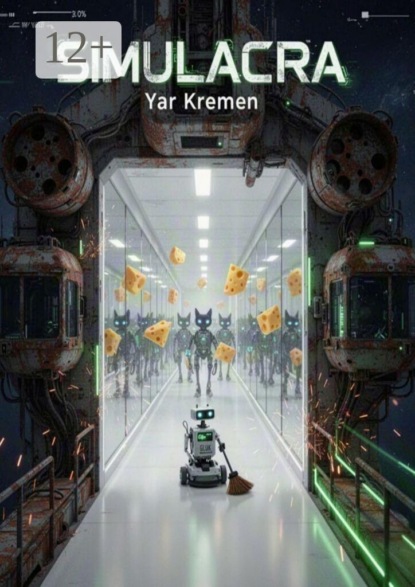


- -
- 100%
- +
They moved further. The corridor twisted. Up and down. Doors everywhere. Each with a sign. HYSTERIA ROOM NO.1 CORNER OF GRIEVANCES EMOTIONAL SHUTDOWN ZONE — This isn’t a kindergarten, — Cheddar said. — It’s a concentration camp for feelings. — Concentration camps are scarier, — Gadget noted. — Not for a child, — Shadow replied. — For a child, a kindergarten can be a concentration camp.
They stopped in front of the largest door. It was green, with painted trees and a sun. The inscription read: GRIEVANCE ROOM. ENTRY ONLY WITH PSYCHOLOGIST’S PERMISSION. — Did Myaus have a psychologist? — Iskra asked. — Myaus had a trauma, — Cheddar replied. — A psychologist is a luxury. — And what instead? — Cheese. Cheese was the psychologist.
Gluk shook his head. — Cheese doesn’t cure grievances. Cheese masks them. Like mold. — You’re speaking like a philosopher, — Iskra noted. — I’m speaking like a cheese-eater who’s been offended by dirty floors many times.
He pushed the door. It opened.
Part Two. The Grievance Room
The space was huge. Much larger than it looked from the outside. The walls here were soft — covered in something like foam rubber. The floor was rubbery, like in a gym. In the corners lay toys: plush mice, rubber cheese heads, rattles shaped like blasters. But the main thing was in the center. There sat a kitten. Huge. The height of the shuttle. He was a hologram. Transparent, shimmering, but very realistic. And he was crying. Tears rolled from his eyes the size of tennis balls and fell on the floor. There they turned into puddles of light and vanished. — This is Myaus, — Shadow said. — Little. — Why is he crying? — Gluk asked. — Because they offended him. — Who? — Everyone, — Cheddar said, looking at the screen hanging over the kitten.
On the screen, inscriptions scrolled: “You’re strange” “Nobody wants to play with you” “You have no friends” “Your cheese stinks” — The last one is especially cruel, — Gadget noted. — That was the most painful, — Shadow said, reading data from her tablet. — Little Myaus had cheese. He brought it to kindergarten to share. And they said it stank. — And what did he do? — He cried. And hid in a closet. Sat there for three hours.
Gluk stared at the crying kitten, his bulbs blinking in sadness mode. — That’s dirty, — he said. — Very dirty. — What? — Iskra asked. — Offending a little cat over cheese. Cheese can’t stink. Cheese smells like life. — To children it stank. — Children are stupid. If I were Myaus, I’d punch them in the face. — You don’t punch faces. You clean them. — I’d clean their faces. With a stiff brush.
Cheddar placed a hand on Gluk’s head. — Don’t, — he said. — They grew up. Probably. — I hope they became cleaner. — I hope so.
Meanwhile, the kitten continued crying. His sobs were loud, like distant thunder. — How do we calm him down? — Gadget asked. — We need to pity him, — Shadow said, reading the instruction. — It’s written on the wall.
They looked at the wall. There, in childish handwriting, it said: PITY ME. THEN YOU MAY PASS. — Blackmail, — Iskra noted. — Childish blackmail, — Cheddar corrected. — The most honest kind. A child doesn’t lie about feelings.
He approached the hologram. — Hello, — he said softly. — What’s your name? The kitten raised his head. — Myaus, — he answered, sniffing. — I’m Cheddar. I came with friends. — Why? — We want to pity you. — Please, — the kitten whispered. — Nobody pities me. The caregiver says: “Stop whining, you’re big already.” But I’m not big. I’m only three years old. — Three years is small, — Cheddar agreed. — Small ones have the right to cry. — Really? — Really. Even big ones cry sometimes. But they do it in the shower, so nobody sees.
The kitten laughed through tears. — In the shower? Like washing? — Exactly, — Cheddar said. — Washing is also crying. Only with water.
Gluk nodded. — Washing is cleanliness. Cleanliness is happiness. So crying in the shower is the path to happiness. — You’re strange, — the kitten said, looking at Gluk. — I’m a cleaner. Cleaners are always strange. — Do you clean? — Everything. — Will you clean me? — You can’t be cleaned, — Gluk said seriously. — You’re not dirty. You’re sad. Sadness isn’t washed off with a brush. — Then with what? — Kind words. And cheese.
He pulled a small piece of cheese from his pocket — an emergency reserve — and handed it to the hologram. The kitten took it. Paws passed through the piece. — I can’t eat, — he said sadly. — I’m not real. — Your feelings are real, — Cheddar replied. — That’s what matters.
The kitten cried again, but quieter now. — They offended me, — he said. — We know. — They said I wasn’t like them. — What “not like”? — I don’t know how to play like them. Don’t like what they like. I like sitting in the corner and reading. And they like running and screaming. I don’t know how to scream. — You don’t need to scream, — Iskra said. — Screaming is weakness. — Then what do I do? — Stay silent. And wait. When they get tired of screaming, you’ll still be sitting in the corner with a book. And then you’ll win.
The kitten looked at her. — You look like a warrior. — I look like someone who was also in the corner, — Iskra replied. — Only I didn’t have a book. I had a blaster. — Is a blaster better? — A book is better, — Iskra said. — A blaster shoots, but a book teaches. I realized that too late.
The kitten sniffled. — Were you all in the corner? — Yes, — Gadget said. — I was in the corner with a soldering iron. Fixed toys for other kids, and they never said thank you. — And I was in the corner with a tablet, — Shadow said. — And trusted no one. Still don’t. — And me? — Gluk asked. — I wasn’t in the corner. I was in the center. Because there’s more dirt in the center. And I have to clean it.
The kitten smiled. — You’re funny, — he said. — And kind. — We’re cheese-eaters, — Cheddar replied. — We’re always kind. Especially after cheese. — Do I have cheese? — the kitten asked. — You did. You brought it to kindergarten to share. And they said it stank.
The kitten cried again, but louder now. — That was untrue! — he shouted. — My cheese didn’t stink! It smelled like home! Like Mom! Like warmth! — We know, — Cheddar said. — We believe you. — But they didn’t believe. — They were stupid. — All children are stupid, — the kitten sobbed. — And the caregivers too. Especially the caregivers. — Caregivers are people who never grew up, — Gluk said. — Adults don’t offend children. Adults clean them. — Clean them? — Well, morally. Teach them good things. — Nobody taught me good things, — the kitten said. — They taught me I was bad. — That’s the dirtiest lie, — Gluk said firmly. — You’re not bad. You’re little. And little ones can’t be bad. They can only be sad.
The kitten fell silent. The tears stopped flowing. The hologram began to shimmer more calmly. — Thank you, — the kitten said. — You’re the first to pity me. — You’re welcome, — Cheddar replied. — Pass through. The door is open.
Indeed, in the far wall, a door appeared. Large, normal size. — Let’s go, — Cheddar said. — And him? — Gluk asked, nodding at the kitten. — He’ll stay here. But now he knows someone pities him. That will make him stronger. — And cleaner? — And cleaner, — Cheddar agreed.
They moved toward the door. But at that moment, the room shook.
Part Three. The Trap
The walls began to close in. Slowly, but surely. — What’s happening? — Gadget asked. — A trap, — Shadow replied. — Emotional. — But we pitied the kitten! — You did. But someone on the team lost patience.
Everyone looked at Iskra. She stood, fists clenched. Her face was red. — What? — she asked. — This crying gets on the nerves! — You lost patience, — Cheddar said. — And the room started closing. — Is it my fault? — Not you. Your emotion. The trap reacts to negative feelings. You got angry — the room closed. — I’m not angry! I’m just… nervous. — It’s the same thing for the system.
The walls continued to move. The distance between them was now about ten meters. In a minute, it would be five. — What do we do? — Gadget asked. — Calm Iskra down, — Shadow said. — Not possible, — Iskra replied. — I don’t calm down on command. — Then calm the room. — How? — Someone needs to cry. — Why? — The trap is tied to tears. The kitten cried — the door opened. Iskra got angry — the walls moved. If someone cries, maybe the system will switch. — Who will cry? — Cheddar asked.
Everyone looked at Gluk. — I don’t know how to cry, — he said. — I don’t have tear ducts. I’m a robot. — What about Krylatik? — Iskra suggested.
Krylatik sat on Gluk’s back and chirped in terror. — Peek-peek-peek! — He’s already crying, — Gadget noted. — Just not with tears, but with sounds. — Not working, — Shadow said, looking at her tablet. — The system doesn’t react to chirping. Needs real tears. Organic. — I have cheese, — Gluk said. — Cheese can cry if you cut it. — Cheese doesn’t cry, it releases oil. — That’s also a liquid. — Not the right one, — Cheddar cut in.
The walls kept closing. Eight meters now. — Gadget, — Cheddar said. — Can you hack the system? — I’ll try, — Gadget replied, pulling out his tablet. — But I need time. — How much? — About three minutes. — We have one. — Then help.
Cheddar looked at Iskra. — You need to calm down. — I’m trying! — Try harder. — I don’t know how! — Remember something nice. — Like what? — Cheese.
Iskra closed her eyes. — Fine. Cheese. Icy Brie. Cold, salty, with noble mold. — Not mold, noble rind, — Gluk corrected. — Doesn’t matter. It’s tasty. I eat it on the Norka. Cheddar slices it. Gluk cleans the plate. Shadow watches. — I don’t watch, I observe, — Shadow said. — What’s the difference? — You calming down? — A little, — Iskra admitted.
The walls slowed down. — It’s working, — Gadget said. — Keep going. — What else? — Iskra opened her eyes. — Coffee. Morning coffee. When the Norka flies smoothly, and I drink coffee on the bridge. Nobody’s there. Just me and silence. — And dust? — Gluk asked. — And dust, which you scrub later. — I don’t scrub dust, I scrub order. — Doesn’t matter. Silence. Coffee. Order.
The walls stopped. — A bit more, — Gadget said. — I almost got it. — What do you need? — Cheddar asked. — Another thirty seconds. — But the walls are stopped. — They’re stopped because Iskra is calm. But if she gets angry again… — I won’t get angry, — Iskra said. — I’ll keep thinking about cheese. — Think faster, — Gluk said. — I want to eat too. — You don’t eat. — But I want to. Morally.
The walls trembled. — Don’t get angry, — Cheddar warned. — I’m not angry, I just want to eat. — Gluk, don’t help.
Gadget tapped on his tablet. His fingers flew across the touchscreen. — Got it! — he said. — I disabled the emotion sensors. The walls won’t react to mood anymore. — Will they stop? — Iskra asked. — They won’t stop because they already stopped. But if someone gets angry again, nothing will happen. — Hooray, — Gluk said. — I can get angry now? — Why would you want to? — I want to check. — Don’t. — Pity.
Cheddar approached the door. — Let’s move. Before the room changes its mind. — Rooms don’t think, — Gadget noted. — This one does. It has Myaus’s emotions.
He pushed the door. It opened. Behind it was a new corridor. Normal size. — We passed, — Cheddar said. — Almost, — Shadow replied. — There’s one more thing. — What? She nodded at the corner of the room. There, where the crying kitten had just stood, now sat a small hologram. No longer a kitten, but a teenager. — This is the next level, — Shadow said. — Teenage grievances. But they’re behind the door. — And this? — This is memory. About what was.
The hologram raised its head. — Thank you, — it said. — You helped me. — You’re welcome, — Cheddar replied. — No, really. I cried for thirty years. Thirty years, you know? And you came and pitied me. — Thirty years is a long time, — Gluk said. — In that time, you could have cleaned a lot. — I didn’t know you could clean tears. — Tears can’t be cleaned, — Gluk replied. — But they can be wiped. And then the face becomes dry. And a dry face is the first step to a smile.
The hologram smiled. — You’re strange, — it said. — I know. — But kind. — I try.
The hologram vanished. The room fell silent.
Part Four. Humor About Cleanliness
They exited into the corridor. Gluk stopped. — I want to do something, — he said. — What? — Iskra asked. — Go back and clean the hologram. — It’s gone. — Its tears remained. On the floor.
Indeed, on the rubber floor, dark spots were visible — places where holographic tears had fallen. They weren’t real, but they left marks. — It’s a metaphor, Gluk, — Shadow said. — Traces of memory. — Metaphors also need cleaning, — he replied, pulling out his brush. — Don’t. — I must. If a metaphor leaves a trace, it’s material. And material dirt must be removed.
He rolled up to the spot and ran his brush over it. The rubber squeaked, but the spot didn’t disappear. — See? — Iskra said. — It’s not dirt. — Then what? — Memory. Memory can’t be washed off. — Everything can be washed off, — Gluk said stubbornly. — If you know what with.
He pulled out a spray bottle with cleaning solution, sprayed the spot, and ran the brush over it again. This time the spot became lighter. — See? — he said proudly. — You’re erasing Myaus’s memory, — Cheddar noted. — I’m not erasing. I’m lightening. Dark memories should become bright. It’s called therapy. — Therapy with a brush? — What else? Conversations? Conversations don’t clean. They only make dust.
Iskra rolled her eyes. — Move along, philosopher. — I’m a cleaner, — Gluk corrected, but obediently rolled after her.
The corridor led to an elevator. Adult, normal size. — Next level — Paranoia Department, — Shadow said, checking her tablet. — Sounds fun, — Gadget noted. — It’s only fun for paranoiacs. — And Shadow is a paranoiac, — Gluk reminded. — I’m not a paranoiac, I’m cautious. — You suspect everyone. — Because everyone wants to deceive me. — Even me? — Gluk asked. — You want to clean me. That’s also deception. Cleanliness is an illusion. — Cleanliness is reality, — Gluk said offended. — And I’ll prove it. — On the next level, — Cheddar said. — First we go up.
They entered the elevator. The doors closed. The cabin began to rise. Gluk stared at his bulbs, blinking in thoughtful mode. — I’ll still go back and clean those tears, — he said. — Metaphor or not, cleanliness must be everywhere. — Even in someone else’s traumas? — Iskra asked. — Especially in someone else’s traumas. Other people’s traumas are the dirtiest. Because nobody cleans them.
The elevator stopped. Doors opened. On the sign it read: PARANOIA DEPARTMENT. ENTRY ONLY FOR THOSE WHO TRUST NO ONE. — Welcome, — Shadow said. — My element. — Your element is Myaus’s trauma, — Cheddar noted. — Sometimes other people’s traumas match your own. It’s called empathy. — Or projection. — Or truth, — Shadow said and stepped into the darkness.
The team followed. Gluk glanced back at the elevator. — I’ll remember this room, — he said. — I’ll come back and clean every millimeter. — Even the crying kitten? — Especially the crying kitten. Kittens must be clean. And happy.
He rolled forward. Behind him, the elevator doors closed. Ahead lay paranoia. And new tears. But Gluk knew: cleanliness would win. Even if he had to clean metaphors.
CHAPTER 3. PARANOIA DEPARTMENT
Riddle: Why does every step here watch them?
Part One. Entrance
The elevator closed behind them with a soft, almost gentle “ding.” Gluk flinched. — Did it lock us in? — It let us out, — Cheddar replied. — Into a new department. — I don’t want a new department. I want to go back to the kitten. At least he was cute. — The kitten was a hologram. And he was crying. — But he didn’t watch me. — How do you know?
Gluk froze. — You think he was watching? — I think that on Simulacrum Station, everything watches someone. Even the walls. — Walls can’t watch, — Gadget said. — They don’t have sensors. — Are you sure? — Shadow asked.
She stood at the corridor entrance and didn’t move. Her eyes scanned the walls, ceiling, floor. — There are cameras here, — she said. — Lots of them. — Where? — Iskra asked. — Everywhere.
They entered the corridor, and Shadow was right. Cameras were everywhere. Tiny, nail-sized, in every corner, on every panel, even in the floor. They gleamed with black pupils, rotating, clicking. — Creepy, — Gluk said. — It’s paranoia, — Cheddar replied. — Literally. — Whose? — Myaus’s. He was afraid they were watching him. So he built a place where everyone is watched. — But that’s irrational! — Gadget exclaimed. — Why create what you fear? — To control the fear, — Shadow said. — If you create the cameras yourself, you know where they are. And then they aren’t scary. — What if you don’t know? — Then you’re inside someone else’s paranoia. And that is scary.
She took a step forward. The cameras all turned toward her in unison. — They’re watching, — she said. — They like you. — They suspect me. In paranoia, everyone suspects everyone. Even the cameras.
Above the entrance hung a sign. Large, metal, with stamped letters: HERE YOU ARE ALREADY SUSPECTED Below it — in small print: If you are reading this, you are already under surveillance. Do not try to hide. It is useless. — Welcome to hell, — Iskra said. — Hell is cleaner, — Gluk noted. — Hell has fire. Fire sterilizes. — Have you been to hell? — No. But I read about it. There’s a lot of dust. — Dust from burnt sinners. — Then it needs cleaning. — Gluk, not now.
They walked down the corridor. The cameras followed their every move. Each step echoed. Somewhere far away, something clicked. — What’s that sound? — Gadget asked. — Shutters, — Shadow replied. — Cameras are photographing us. Every second. — Why? — To compare with our copies later. To figure out who’s real and who’s not. — What if we’re all real? — Then the cameras will look for what we’re lying about. — What if we’re not lying? — Then they’ll find what we’re afraid of. In paranoia, fear is proof of guilt.
Gluk stopped. — I’m not afraid of anything, — he said. — You’re afraid of dirt. — Dirt isn’t fear. It’s an enemy. — An enemy you’re afraid of.
Gluk thought. His bulbs blinked. — Maybe, — he admitted. — But I’m not ashamed of it. — Shame is also paranoia, — Shadow said. — Fear of others’ opinions. — Then I’m not a paranoiac. I don’t care what they think. — Even when you’re cleaning the floor, and someone says it’s already clean? — Then I think that person is an idiot. Idiots don’t count.
Iskra chuckled. — You’re a philosopher. — I’m a cleaner. Cleaners see the world as it is. Dirty. — And after cleaning? — Clean. But that’s no longer the world. That’s an ideal.
The corridor ended. They entered a large hall. The hall was round. Walls — solid screens. On each screen — themselves. From different angles, in different lighting, from different cameras. — We’re everywhere, — Gadget said. — There are many of us, — Cheddar added. — Those aren’t us, — Shadow said. — Those are our reflections. The system projects our images to make us feel watched. — Working, — Gluk said. — I already feel it.
He looked around. One camera stared straight at him. — What do you want? — he asked. The camera clicked. — Did it answer? — Gluk asked. — It took a picture. — That’s not an answer. — For a camera — it’s the best answer. It collected data. — What kind? — Your fear. You asked “what do you want?” — which means you’re afraid it has a purpose. And it does. To watch. — I’m not afraid, I’m curious. — The camera can’t tell the difference. For it, any question is anxiety. And anxiety is proof of guilt.
Gluk fell silent. Then pulled out a rag and threw it over his head. — What are you doing? — Iskra asked. — Hiding, — Gluk said from under the rag. — Seriously? — I’m invisible! — You’re a robot with a rag on your head. The cameras see you. — Through the rag? — They have thermal imagers. — And I’m not warm. I’m a robot. — They also have motion sensors. — I’m standing still. — You move when you talk. — I talk with my mouth. My mouth doesn’t move. — You’re moving your whole body, Gluk. You’re only invisible in your head.
Gluk pulled the rag off. — This system is unfair, — he said. — Paranoia is never fair, — Cheddar replied. — It always looks for what isn’t there. — And what do we do? — Understand the logic, — Shadow said. — Like in any detective story. Find the rule. — What rule? — The one this level runs on. If we figure it out, we can pass.
She approached the wall. The screen showed her face in close-up. — Do you want to deceive me? — the screen asked in a voice resembling Myaus’s. — No, — Shadow replied. — Then why are you hiding your thoughts? — I’m not hiding them. I’m just not saying them out loud. — Not speaking means hiding. — Not speaking means staying silent. Silence isn’t a lie. — Silence is suspicious. — For a paranoiac — yes. For a normal person — no. — You think I’m abnormal? — I think you’re a trauma. Traumas are always abnormal.
The screen went dark. Then lit up again. Now it showed Cheddar. — You’re lying about your intentions, — the screen said. — I’m not lying. — You say you came to help. But you want to shut down the station. — I do. Because it’s killing Myaus’s personality. — Personality can’t be killed. It can only be copied. — A copy isn’t a personality. — Then what is? — The one who suffers. The one who doubts. The one who cleans floors for no reason.
Gluk nodded. — That’s me, — he said. — I’m a personality. — You’re a robot, — the screen said. — Robots don’t have personalities. — Yes, they do, — Gluk countered. — I love cleanliness. I love cheese. I love my team. That’s a personality. — That’s a program. — A program is an instruction. And I’m a choice. I choose to clean. — You’re forced to clean. It’s your function. — Function is work. And I work with joy. Which means it’s a choice.
The screen flickered. — You’re… strange, — it said. — I’ve been told that already. Today. Twice. — Because it’s true. — Truth doesn’t make me strange. Truth makes me real.
The screen went dark. This time — for a long time. — Did you break it? — Iskra asked. — I made it think, — Gluk replied. — That’s worse than breaking it.
Part Two. The Rule
They walked to the center of the hall. There stood a pedestal. On it — a monitor. On the monitor — text: LEVEL RULE To pass further, perform an action that cannot be tracked. — What does that mean? — Gadget asked. — It’s a riddle, — Cheddar replied. — Like “do something impossible.” — Impossible doesn’t exist, — Gadget said. — Everything can be tracked if there are enough sensors. — And here there are thousands, — Shadow added. — Cameras, microphones, motion sensors, thermal imagers, smell analyzers. — Even smells? — Gluk shuddered. — They track smells? — Smell is data. You smell like polish and cheese. — That’s a good smell! — For cameras — it’s just molecules. They fixate on them.
Gluk sniffed himself. — I’m clean, — he said. — My molecules are in order. — Molecules aren’t in order. They just exist. — I have order! — You have an illusion.
Gluk frowned and fell silent. Cheddar approached the monitor. — An action that cannot be tracked, — he repeated. — Maybe it’s something mental? A thought? — Thoughts can’t be tracked, — Gadget said. — There are neurointerfaces, of course, but not here. I checked. — Then a thought is an option. — But how will the system know we thought it? It needs confirmation. — So not a thought. — Maybe a feeling? — Iskra suggested. — Love, hatred, fear. They can’t be tracked directly. — Only through indirect signs: pulse, pressure, pupils, — Shadow countered. — And there are sensors for all that here. Even pupils, the cameras see. — Then nothing works, — Cheddar said. — Everything is tracked. — Seems so. — But there’s a rule. Which means there’s a solution.
Конец ознакомительного фрагмента.
Текст предоставлен ООО «Литрес».
Прочитайте эту книгу целиком, купив полную легальную версию на Литрес.
Безопасно оплатить книгу можно банковской картой Visa, MasterCard, Maestro, со счета мобильного телефона, с платежного терминала, в салоне МТС или Связной, через PayPal, WebMoney, Яндекс.Деньги, QIWI Кошелек, бонусными картами или другим удобным Вам способом.