

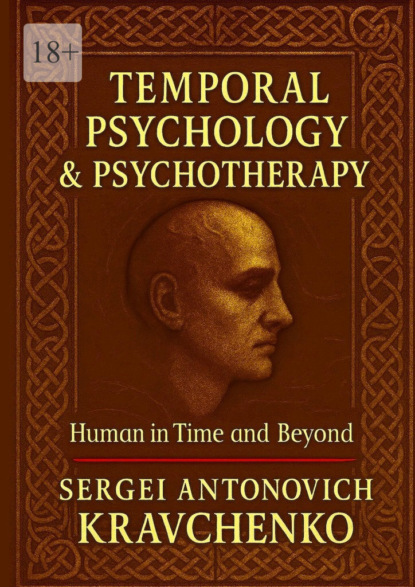
Temporal Psychology and Psychotherapy. The Human Being in Time and Beyond



- -
- 100%
- +
Conclusion. Using AI to anticipate its own dangers is possible only under the condition of conscious and responsible work with maps of possible futures. ASC and CTC make it possible to see threats as inner shadows of civilization rather than as an «external enemy.» This turns AI not only into a source of risk, but also into an important tool for human self-understanding in time.
Literature
Bostrom, N. Superintelligence: Paths, Dangers, Strategies. Moscow: Mann, Ivanov i Ferber, 2016 (Russian translation).
A book by one of today’s leading philosophers, devoted to existential risks associated with the development of artificial intelligence. Bostrom examines scenarios in which intelligent systems slip out of human control and proposes conceptual approaches to managing AI in a safe way. The work has become a classic in the philosophy of technology and is essential for understanding the limits of human responsibility.
Kravchenko, S. A. ASC and AI – 2. The Book of the Bridge (ИСС и ИИ – 2. Книга Моста). Izdatel’skie Resheniya, 2025.
A monograph that develops a methodological and therapeutic approach to building a «bridge» between altered states of consciousness (ASC) and artificial systems. The author offers a philosophical and psychological grounding for coupling ASC and AI as new forms of interaction between humans and technologies aimed at exploring the future.
Russell, S. Human Compatible: Artificial Intelligence and the Problem of Control. New York: Viking, 2019.
One of the creators of modern AI systems analyzes the control problem and advances the concept of «human-compatible» or human-centered intelligence. Russell shows that the key task is not merely to build a smart system, but to make its goals compatible with human values. The book is fundamental for the ethics and governance of AI.
Tegmark, M. Life 3.0: Being Human in the Age of Artificial Intelligence. New York: Alfred A. Knopf, 2017.
A popular-science work that outlines possible scenarios for the co-existence of humanity and artificial intelligence. The author combines scientific argument with philosophical analysis, examining the prospects of self-developing systems and the ethical consequences of their interaction with society.
Floridi, L. The Ethics of Information. Oxford: Oxford University Press, 2013.
A fundamental philosophical study of how ethical principles are transformed in the age of information technologies. Floridi introduces the concept of the «infosphere» and proposes an ethics oriented toward preserving cognitive ecology. The book sets theoretical frameworks for discussing the moral foundations of AI development.
Yudkowsky, E. «Artificial Intelligence as a Positive and Negative Factor in Global Risk.» In N. Bostrom & M. Ćirković (Eds.), Global Catastrophic Risks. Oxford: Oxford University Press, 2008, pp. 308—345.
A researcher of Friendly AI and co-founder of the Machine Intelligence Research Institute describes the dual nature of artificial intelligence as both a driver of progress and a source of threat. Yudkowsky stresses the need for ethical and technical preparation for a future in which intelligence may become an autonomous factor of global safety or catastrophe.
___
Journey into the Future: Consciousness as an Alternative to Space Travel
Insights and Foresight in Altered States of Consciousness
Researchers note that a person in an altered state of consciousness (ASC) is capable of stepping beyond ordinary temporal perception and gaining unexpected insights. For example, in states of deep relaxation or meditation, the brain may generate specific theta rhythms, during which creative breakthroughs – and even anticipations of future events – can occur.
The Russian scientist D. Spivak describes that during immersion into an «oceanic feeling» (loss of ego boundaries in deep meditation), individuals often experience an eureka effect: complex problems find solutions, discoveries emerge, and sometimes future events are foreseen. In other words, in non-ordinary states of consciousness, it is occasionally possible to intuitively grasp fragments of the future or solutions not yet apparent in the ordinary waking state.
It is crucial, however, to emphasize that such «traveling» in the time of consciousness requires preparation. Only a specialist deeply engaged in present-day tasks can recognize the correct solution by «glancing into the future» and bringing it back into the present. In this sense, such mental journeys genuinely transfer elements of the future into current reality, advancing human civilization.
Psychologists even use the term psychonaut – by analogy with «astronaut» – to describe a person who explores the inner space of consciousness. If the astronaut travels into outer space, the psychonaut travels into the other dimensions of the mind, revealing new aspects of reality without rockets or spacesuits.
Scientific Research and Experiments on Anticipating the Future
Modern scientific experiments provide data suggesting that the human psyche may receive information from the future. In parapsychology, this phenomenon is known as precognition.
In 2011, the psychologist Daryl Bem published sensational results showing that test subjects statistically anticipated future stimuli – the work became known as «Feeling the Future.» Although controversial, later meta-analyses confirmed a small but consistent anticipatory effect.
Other researchers approached the question neurophysiologically. Dean Radin and Julia Mossbridge at the Institute of Noetic Sciences demonstrated that the body may react to a future event before it occurs. In one experiment, subjects pressed a button, after which a computer randomly displayed either a neutral image or a shocking one. EEG recordings showed that several seconds before the picture appeared, the brain’s activity already shifted: remaining calm before neutral images and showing a spike before traumatic ones. This presentiment effect has been replicated in independent laboratories.
Moreover, in 1995 the CIA declassified results of its own psychic research program, where statisticians confirmed the reliability of similar experiments. These data force scientists to reconsider the linear model of time: consciousness may be capable of stepping outside strictly sequential time and obtaining information from the future.
Beyond laboratory studies, unusual applied psychophysiology experiments are noteworthy. In the Novosibirsk Akademgorodok, under academician V. Kaznacheev, the «Kozyrev mirror» was developed – curved metallic constructions influencing subjects’ states of consciousness. The goal was to study the noosphere (in V. Vernadsky’s concept – the sphere of planetary mind) and hidden reserves of the brain.
The results were astonishing:
– At the Dikson polar station, two spatially separated participants exchanged mental images, and one-third of the transmitted symbols appeared ahead of time.
– In several experiments, symbols randomly generated by a computer an hour or even seven hours later were already perceived in advance by participants inside the mirrors.
Kaznacheev’s student Alexander Trofimov called this phenomenon strong evidence for the astrophysicist Nikolai Kozyrev, who argued that «the future exists in the present.» In special conditions, time seems to compress. Novosibirsk researchers reported that they learned to monitor upcoming events – for instance, predicting an earthquake a week before it occurred.
Although such studies border on the esoteric, they show that alternative methods of accessing future information are being explored even in academic contexts, though they remain controversial.
Philosophical and Spiritual Concepts of «Traveling» into the Future
The idea of gaining knowledge of the future through special states of consciousness appears in many spiritual traditions and philosophical teachings.
Ancient shamans viewed ecstatic trance as a means of peering beyond ordinary reality. In shamanic cultures, journeys in the spirit world – induced by drumming or psychoactive plants (ayahuasca, mushrooms) – allowed shamans to «see» future events of the tribe: predicting weather, locating game, or foreseeing danger.
Ancient oracles (e.g., Delphi) entered trance through vapors or psychoactive substances in order to divine the future – historical evidence of spiritual practice serving as a «time machine» long before science fiction.
In Eastern philosophy, meditation is believed to grant siddhis, extraordinary abilities. Patañjali’s Yoga Sutras mention bhavishya, the ability to foresee future events, achieved through deep concentration and samadhi. Buddhist texts also describe the «divine eye,» enabling vision of what is yet to come.
Transpersonal psychology has offered its own interpretation. Stanislav Grof, founder of the field, documented numerous cases where people in psychedelic or holotropic sessions experienced leaving ordinary time and space. Some reported vivid, convincing visions of future events; others felt able to «travel» through historical epochs – a kind of time navigation without external devices. Though difficult to verify, several correspondences with later real events were recorded.
Philosophers likewise reflect on the nonlinearity of time. Vernadsky and Teilhard de Chardin’s concept of the noosphere envisions humanity’s collective mind as an evolving field in which past, present, and future are interconnected. Contemporary thinkers like Ervin Laszlo develop the idea of the Akashic field – a universal data matrix containing all events, past and future. In this view, altered states (meditation, extrasensory perception) are ways of connecting to a global information network and receiving sparks of future insight.
In sum, the literature on «journeying into the future» through consciousness is vast. It spans scientific papers and experimental reports, philosophical treatises (such as Grof’s Psychology of the Future), and spiritual texts from various traditions. Despite differences, all sources converge on one idea: human consciousness can act as a vessel capable of crossing the boundaries of time.
An alternative to space travel already exists – voyages into the inner cosmos, requiring not rocket technology but deep immersion into the mysteries of the psyche and spirit. As our understanding of the brain and consciousness expands, such «flights of thought» move ever closer to scientific plausibility.
___
The Precognition Disposition Questionnaire (PDQ-24) is provided in the Appendix to Chapter 8.
Chapter 9. Eternity as a Psychological Phenomenon
«What is, is ungenerated and indestructible, whole, unique, immovable and complete.
It neither was nor will be, since it is now, all at once, one and continuous.»
– Parmenides, On Nature (fr. 8)
Summary
This chapter treats eternity not as abstract metaphysics, but as a psychological experience in which linear temporal sequence falls apart and there arises a sense of participation in an infinite flow of meanings. Through an analysis of mythological, Jungian, and phenomenological approaches (Eliade, Jung, Bergson, etc.) and through the lens of practice (autogenic training, transpersonal techniques, artistic creation), it shows how this experience shapes the integrity of personality, strengthens creative potential, and serves as a resource for existential resilience. Special attention is paid to symbolism (the medallion of eternity, ouroboros, knot, triskelion) and to practical recommendations for using visual anchors in therapeutic and art practice. At the end of the chapter, warnings are given about possible risks when working with atemporal states, and reference is made to an extended list of symbols in the appendix to Chapter 9.
Key Concepts
Eternity – a universal cultural and religious notion denoting a going-beyond linear time. In different traditions it is understood as the endless cycle of nature (mythologies), immutable being (ancient philosophy), an attribute of God and afterlife (monotheistic religions), emptiness and impermanence (Buddhism), durée or eternal return (modern philosophy). In psychology and psychotherapy – the subjective experience of belonging to an infinite flow of meanings.
Eternity (as a subjective experience) – a state of consciousness in which the sense of sequential time disappears and participation in the infinite opens up.
Duration (durée) – phenomenologically lived «living time,» a flow of consciousness that cannot be decomposed into discrete segments (Bergson).
Atemporality / timelessness – a psychic state of falling out of time, the experience of its halt.
Archetypes of the collective unconscious – universal symbolic structures expressing universal human experience (Jung).
Visual / symbolic anchor (medallion of eternity) – an image or object that fixes access to the state of participation in eternity and serves as a therapeutic point of reference.
Transpersonal experience – an experience of going beyond the individual «I» and personal biography, associated with a sense of unity with the world.
Autogenic training (AT) – a method of self-regulation based on formulaic suggestions and relaxation, used to enter special mental states.
Aims of the Chapter
– To give a compact definition of eternity as a psychological phenomenon and distinguish it from philosophical and metaphysical interpretations.
– To show the cultural-historical and Jungian roots of the experience of eternity through the analysis of symbols and rituals.
– To describe practical ways of inducing atemporal states (AT, meditative techniques, artistic contemplation) and formulate clinical recommendations and cautions for their use.
The Ornament «Medallion of Eternity»

The Ornament «Medallion of Eternity»
This composition is an attempt to visually connect several archetypal images through which different cultures have expressed the idea of non-linear, cyclical, and infinite time.
The outer ring – ouroboros (a snake biting its tail) – reflects the closedness of cycles, the idea of return and self-reproduction; the central interwoven knot – a relative of the Tibetan «endless knot» – symbolizes the interdependence of events and the impossibility of isolating a «beginning» or an «end»; the spiral groups (triskelion-like clusters) give movement and recall the three-vector structure of time (past—present—future), while the stylized «key» at the base (an echo of the ankh / Armenian sign of eternity) functions as a semantic anchor – an indication of life, meaning, and continuity.
From a psychological point of view, such an image works on several levels at once. It is both a «medallion of memory,» holding semantic layers of experience, and a focusing instrument that helps to experience a break with the linear sequence of time: in contemplation, the boundaries of «I» and «now» shift, and a sense of belonging to a wider current of being opens up. In autogenic training, meditation, or artistic creation, such a medallion can serve as a visual anchor – as an object through which the psyche receives permission to go beyond habitual temporal frames and to feel «eternity» not as an abstraction but as a lived reality.
___
The Eternity Experience Questionnaire and the extended list of symbols of Eternity can be found in the Appendix to Chapter 9.
___
The Idea of Eternity in Culture and Religion
The concept of eternity has accompanied humanity since the most ancient times, though it has been expressed differently in different cultures and religions. In the mythologies of early societies, eternity was often understood as the cyclical turnover of nature – the alternation of day and night, seasons, life and death. In Indian philosophy, it is saṃsāra, the endless cycle of rebirth.
In ancient Greece, eternity was associated with the idea of an immutable cosmos (Parmenides, Plato), and in Rome – with the cult of the eternal city. Christianity gave the concept a personal meaning: eternity became a quality of God and the goal of the soul. In Islam, eternity is also understood as the infinitude of Allah and as life after death.
In Buddhism, eternity is rather rejected as an illusion of permanence; the accent falls on emptiness and impermanence. In modern philosophy (Bergson, Schopenhauer, Nietzsche), eternity gained new shades – as «duration,» «will,» «eternal return.»
Thus, the idea of eternity is truly universal: it is present in all traditions, but its meanings differ – from mystical experience to philosophical reflection and religious dogma.
Plato (Timaeus, 37d—38a) writes:
«Time came into being together with the heaven, in order that, being generated together, they might also be dissolved together. It was made in the likeness of eternity, so that it might be as like it as possible. For eternity abides in the unity of the same, whereas time, in ever-moving likeness, imitates eternity.»
Here Plato contrasts eternity (as motionless, perfect being) and time (as its image in motion).
Philosophy and Psychology of Time and Eternity
Introduction: Eternity as a Psychological Phenomenon
Eternity as a psychological phenomenon is a subjective experience in which the human psyche goes beyond linear, sequential time and feels unity with the infinite, the transcendent, or the cosmos. This is not just an abstract philosophical category, but a deep psychic process that appears in mystical experiences, creativity, love, and even in relaxation practices such as autogenic training (AT).
Eternity here is understood not as an objective reality, but as an inner state of consciousness in which time loses its linearity, becoming «duration» or an atemporal flow. This sense of participation in the eternal allows a person to transcend the limitations of everyday existence, integrating archetypes, myths, and emotional bonds into a single psychological whole.
The philosophy and psychology of time and eternity explore how these experiences shape human consciousness. Key thinkers such as Mircea Eliade, Carl Gustav Jung, Henri Bergson, Erich Fromm, and Viktor Znakov offer interpretations in which eternity is linked to the collective unconscious, creative impulse, and modes of being. Below, we examine these ideas, drawing on their works to reveal how eternity manifests in the psyche.
Mythological and Cultural Aspects of Eternity: Mircea Eliade’s Perspective
In Myths, Dreams and Mysteries (2000, Russian edition), Mircea Eliade regards eternity as a psychological phenomenon rooted in mystical experience and cultural rituals. He analyses how, in different cultures – from archaic societies to modern belief systems – myths and rituals function as mechanisms for stepping beyond linear time.
Eliade emphasizes that through mystical experiences the individual feels unity with the cosmos, overcoming temporal limitations. Dreams and mysteries serve as a bridge to the transcendent, where eternity is integrated into everyday psyche not only as a personal experience but also as a cultural phenomenon.
This echoes ideas of atemporality in creativity and love, where mythology shapes the psychological perception of reality. Eliade shows that eternity is not an illusion, but a fundamental way in which the psyche copes with the finitude of existence, returning to «sacred time» via rituals and symbols.
He writes (in Russian translation of The Myth of the Eternal Return and The Sacred and the Profane):
«For religious man, time, like space, is not homogeneous or continuous. There is, therefore, sacred time and profane time. Every religious festival, every liturgical time means an actualization of a sacred event that took place in mythical past, «in illo tempore’. Participation in the festival leads the believer out of ordinary duration and into sacred time, which becomes present again. Thus sacred time is indefinitely recoverable; it can be repeated endlessly.»
Archetypes and the Collective Unconscious: Carl Gustav Jung
In Psychology and Alchemy (1997, Russian edition), Carl Gustav Jung interprets eternity through the lens of analytical psychology, linking it with archetypes of the collective unconscious. For Jung, alchemy is a metaphor for a psychological process of transformation in which the symbols of transforming metals mirror inner shifts in consciousness.
Mystical experiences such as union with the Self lead the psyche beyond linear time, enabling a sense of participation in the eternal. Jung interprets alchemical texts as projections of psychic processes in which the symbolism of eternity appears in dreams and visions.
Alchemy, in this sense, becomes a path to integrating opposites – consciousness and the unconscious – leading to transcendent states, crucial for understanding creativity and love. Eternity is seen here as a psychological reality in which the collective unconscious offers timeless patterns that help the person overcome the temporal limitations of the ego.
Duration and Creative Impulse: Henri Bergson
In Creative Evolution (1992, Russian edition), Henri Bergson introduces the notion of duration (durée) as intuitive, non-linear time, in contrast to mechanistic, chronological time. Eternity is felt through the creative process, where life evolves as a continuous flow that leads beyond linear time.
Bergson analyses evolution as an impulse in which mystical and creative experiences allow contact with the eternal. Love and creativity appear as forms of duration in which the individual feels unity with the cosmos, transcending the breaks of sequential time.
This approach is fundamental for understanding the psychological perception of time in the context of mysticism and AT, where «duration» becomes a key to transcendence, allowing the psyche to integrate past, present, and future in a single flow.
Modes of Being and Alienation: Erich Fromm
In To Have or To Be? (2004, Russian edition), Erich Fromm contrasts two modes of existence: having (possession) and being (existence), where eternity is reached precisely through «being» in love and creativity.
He analyses how consumer society alienates a person from the eternal by imposing a linear time of accumulation. Love as being leads beyond this linear time, creating participation in eternity through deep relationships. Fromm addresses psychological aspects in which «having» leads to alienation and egoism, whereas «being» leads to mystical union, transcending temporal barriers.
This is a key text for the psychology of love as a transcendent phenomenon, showing how eternity manifests in authentic relationships, integrating mysticism into everyday psyche.
Fromm writes (Russian edition of To Have or To Be?):
«If I am what I have, and if what I have is lost, who then am I? I am nothing, except a defeated, humiliated, miserable testimony to a wrong mode of living.»