

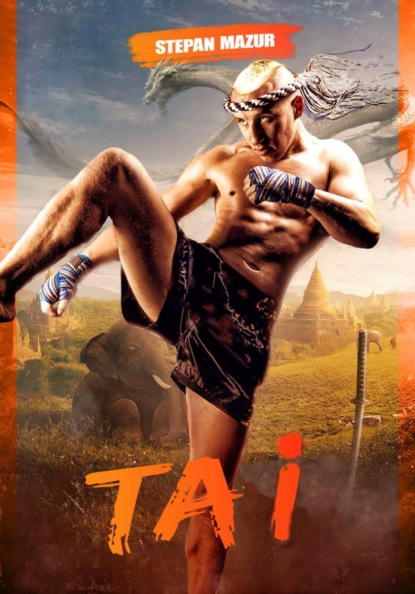
Tai (*in english, 28 illustration)





- -
- 100%
- +
In the shade of the casuarinas, the heat felt more bearable. One could nap in a hammock here without getting sunburned. Silent, breezy, and tranquil, it was a perfect getaway spot. Yet, few indulged in this luxury while the nation mourned its dead.
Walking another mile along paths lined with pines, palms, and hammocks, Dalai Tisein stopped across from a swimming pool at the start of the hotel and bungalow grounds. The first tourists strolled into sight, eager to get some swim after breakfast, undeterred by the high, open waves crashing onto the steep shore, or the absence of lifeguards.
Even during an emergency, the Thai government wouldn’t expel the foreigners, who generated a steady income flow for the kingdom. However, security was enhanced. Uniformed guards now patrolled the hotel grounds, while the military deterred potential looters in areas that were devastated by the giant waves but still had valuables to scavenge.
Tourists quickly adapted to the presence of guards, who didn’t restrict their vacation activities or impose any bans. And the guards soon realized that many tourists were eager to swim in any weather, under any circumstances, and despite any mourning. For many, it was their first time seeing a warm sea, a dream they might’ve saved up for years to experience. Even after what the sea had done mere days before, nothing could stop these people from enjoying their well-deserved vacation.
Tai turned toward the hotel. A tightly strung net protected the pool from the sand and dust, sparing the pool filters extra work. The poolside was lined by cabanas and deck chairs. At the intersection of the sand, grass, and concrete pathways, there was a changing room and restrooms, and an outdoor shower spraying water from three sides at the turn of a tap.
There was also a separate foot shower, ideal for washing sand off feet or rinsing flip-flops after a beach stroll. The coarse sand could be tough on the skin, so many would rather get rid of it before stepping on clean paths.
The sand at Mai Khao was coarse and heavy; another reason the beach remained undeveloped and unpopular.
“I’ll go get a job,” the monk said.
“What kind of job?” Tai asked.
“There’s always plenty of work, especially now,” the mentor replied, looking for something to keep his student busy. “In the meantime, you can complete a small task for me.”
Tai perked up. “What’s it?”
“Catch a crab. There are plenty along the shore. Just look carefully.”
“A crab? Easy!” Tai exclaimed and sprinted toward the sea, tuning out everything else.
Chapter 8 – The Crab
The pool was just three hundred feet away from the beach—a quick walk that all hotels on Mai Khao boasted as prime beachfront access. They could’ve all been swept away had the tsunami struck the island directly from the west. Luckily, this open beach turned out to be one of the safest. Those vacationing here were fortunate to have survived the fateful morning when a massive wave washed people away to the south and north.
On his way to the sea, Tai crossed a volleyball court where a local was already raking the sand to make it easier to walk on without sinking into sandy pits.

Tai stopped on a rise. Waves rolled ashore, up to five feet high, amusingly tossing bathers with or without inflatable rings ashore. The waves played with the swimmers, rolling them back into the water, or knocking them down as they tried to enter the surf.
Those using flotation aids, like inflatable rings, pillows, or arm floats, managed the waves best. You could only swim undisturbed by venturing far from shore, but today, few seemed willing to do so. Instead, yellow warning signs that prohibited entering the water lined the shore, but these were largely ignored. To solve that, the locals had stretched nets with buoys near hotels, at least marking a safe swimming area.
Tai squatted, touching the surf. His little sister had told him he’d be a friend to all waters; he had no reason to fear the sea. He spent some time listening to the surf and scanning the shore.
Crabs were all around, crawling out from small burrows scattering the beach from the trees to the water. They didn’t care whether they hid two or twenty feet away from the water; moisture and sustenance were everywhere.
For a moment, Tai even thought he heard the crabs talking between themselves.
Can I understand crabs now?
He listened again. They definitely made some quirky, barely audible sounds. But no miracle had happened. He couldn’t understand them, or the surf.
However, these sounds were soothing, relaxing him. He had no idea how many days he’d need to spend next to the waves to learn to talk with them.
Too bad Alyona hadn’t told him everything. He could only talk to her again when it rains. But for now, he had a task. Remembering it, he jumped up and ran to the nearest crab to catch it on the spot. But the crab immediately retreated into the nearest burrow.
The young crab hunter began digging in the sand to extract the crab from its shelter. But it was no use. The burrow was very deep. His arms weren’t long enough to reach its bottom. And how many branches could it have?
“What is this, an underground maze?” the gray-haired boy muttered.
The crabs didn’t respond. Tai focused on another crab, approaching it from behind, but to no avail. The crabs’ eyes could pop out and rotate in all directions, providing a 360-degree view. Using this, the crab immediately noticed his maneuver and vanished.
But the crab hunter wasn’t giving up. Taking off his shoes, he made seventeen more desperate attempts to catch a crab until he collapsed on the sand, exhausted and out of breath. The crabs just kept escaping him.
“Whatcha doin’?” a Thai boy appeared before him, asking the question in English. Curiously, he looked at his exhausted peer with bandaged hands, who hastily pulled his cap over in a clear attempt to hide his prematurely gray hair, but it stuck out all around. Although Tai had become a novice at the temple, the monk hadn’t shaved his head.
“Catching a crab,” Tai replied, standing up.
They were the same height. The local boy had his hair cropped and ran around shirtless, in shorts and flip-flops. His skin was brown as coffee beans, well-adapted to the local sun tanning it all year round. “Why are you catching it?” he asked.
“I’m practicing.”
“You should be practicing in a training camp,” the local boy retorted, showing off a perfect leg stretch as he mimicked a head kick at an imaginary opponent. “You can’t even fight,” he noted, pointing to Tai’s bandaged hands.
“I’ll learn it someday,” Tai promised, clenching his fist only to relax it immediately. As he dug, sand had gotten under the bandages, and now the granules irritated his wounds whenever he stretched his skin. It wasn’t painful, but it was certainly uncomfortable.
“Will you learn to think someday too?” the local boy laughed.
“What do you mean?”
The shaved boy smiled silently and walked away toward the pool. Tai snorted and turned away, continuing his attempts to catch a crab. After two more failures, he nearly gave up.
Meanwhile, his peer came back with a large yellow plastic bucket. Scooping up some seawater, he approached the hole where the crab had hidden and poured the water in. Nearly a minute later, the crab reappeared. The local grabbed it as it peeked out of the water and proudly showed it to Tai. “See that?”
“But that’s cheating! I can’t do that,” Tai protested, though his mentor hadn’t specified how he had to catch the crab.
“Well, then keep chasing crabs all day until you collapse from heatstroke, Snow White,” the local mocked, pleased with himself for outsmarting the naive tourist.
“You’re Snow White!” Slava retorted. “I’m Tai.”
“Silly Tai,” the boy smirked, twirling the crab in front of his face.
“You’re the silly one,” Tai said, turning away. “If I want, I can catch a hundred crabs.”
“Then you’ll need a lot of energy,” the local boy added amiably. “And for that, you must eat well. Get it?”
At the mention of food, Tai’s stomach growled. He and Dalai Tisein had skipped breakfast that morning, having left before Gatun arrived. The sexton would usually prepare food for everyone, bringing fresh fruits. He was a terrific cook, making edible masterpieces from the simplest ingredients, such as rice, flour, and bananas.
“Where can we get any food?” Tai sighed. “There are only coconuts around.”
The local smirked, took the naïve foreigner by the hand, and led him towards the pool. As they walked, he lowered his voice, “I went for a pineapple at the restaurant’s garden, but the assistant chef chased me away. But they don’t chase away tourists. They take photos with the pineapples and leave. Do you know what else they do?”
“What?” Tai whispered back.
“They eat breakfast for free,” the boy pointed toward the restaurant building, surrounded by tables covered with metal-lidded dishes. “See, the dining hall? Go eat your fill. And don’t forget to bring me some.”
Tai took a close look. The smaller tables lining the walls were laid with teapots, coffee pots, stacks of clean dishes, a bread box offering loaves, buns, bread, and crackers, next to a conveyor toaster, a juice dispenser, and much more, all part of a buffet system. His mouth filled with saliva at the sight of the chilled, freshly squeezed juices. What could be better in the mounting heat?
“What are you waiting for?” the local grumbled. “You look like a tourist. Go on, help yourself. And bring me some food too. Just act like you belong here. Put on a serious face, no smiles. Tourists hardly ever smile. Go on, do it.”
“Okay. And you?” Tai snapped back to reality. “How did you even end up here?”
The other boy heaved a sigh. “I don’t look like a tourist. Our coach brought us to the beach to practice because our training camp was claimed by the military. They set up a temporary aid station there. And here, they already know me. I’ve become too familiar.”
Tai imagined a staff member dragging the boy out of the restaurant by his ear.
“Alright,” he gave in, his legs buckling as he walked to the dining area. He could barely muster any confidence, and even less audacity. Contrary to his peer’s instructions, he smiled timidly, his face turning red as a lobster as he tiptoed in. Glancing at a plate with utensils, he made his way to the tables, constantly looking over his shoulder.
“Sawatdee khap,” a tall staff member greeted him and gestured to an empty table.
“Sawatdee,” Tai replied, stumbling over the word, and shuffled away to get a plate, prohibiting himself to look back at his ambushing friend.
Grabbing a plate, he felt a surge of confidence and walked along the dishes, scooping a little of each with a buffet spoon until his plate was full. He skipped the salads with meat and chicken; they seemed too spicy. He wasn’t fond of unfamiliar soups either, but rice, puff pastries, fried bread with jam, sausages, and juices were a hit. He piled these up.
Then it was simple: a table and a fork flashing in front of him.
As Tai stuffed his face, he sneakily put rolls into his shorts pocket. Under his belt, he tucked a hot toast, and several cheesy balls found their way into his other pocket. These greasy snacks stained his clothing, but he was willing to sacrifice for feeding his accomplice.
Startled by a hand on his shoulder, Tai spun around. His heart sank when he saw Dalai Tisein standing there, looking disapproving.
Barely recognizable without his orange robe and instead dressed in a chef’s apron and cap, the monk held a frying pan. Tai feared it might be used against him, but instead, the monk served him a helping of vegetable omelet, pausing to say in Russian, “Enjoy your meal. Just bear in mind that staff and their charges usually eat after the tourists, who leave plenty of food behind. Or have you caught that crab already?”
“I… I really wanted to catch a crab without cheating, but I got so tired… I promise I won’t do this again,” Tai stammered.
Embarrassed and feeling the monk’s eyes on him, he expected a scolding, but Dalai Tisein merely said, “Don’t disappoint me again, Tai. Meet me by the pool in an hour,” and left without another word, surprisingly calm.
Relieved but still nervous, Tai gobbled the omelet, washed it down with fresh orange juice, and ran off to the beach.
Meanwhile, the monk silently cleaned up after Tai. The neighboring restaurant’s manager, who’d been working since dawn with his staff, smiled at him. Known for learning foreign languages to chat with diners, the manager enjoyed making tourists feel at home by speaking their tongues. He knew a bit of English, French, German, Italian, Russian, and Chinese—initially just a few phrases, but each year he grew more proficient.
“This kid’s full of energy. Are you taking care of him?” the manager asked in Thai, his native language.
“Someone must,” Dalai Tisein replied with a hint of sadness. “He lost his parents.”
“Poor boy,” the manager empathized in English. “His hair turned gray.”
“But he’s determined,” Dalai Tisein shifted to English as well. He spoke English less fluently than Russian, albeit it was more common on the island. “He trains hard, to the point of bleeding.”
“He’ll go far,” the manager remarked in Russian. “What is that saying they have? Haste makes waste?”
“Mysterious are the ways of Buddha,” the monk replied in Russian with a smile. He’d often help the manager practice his English and Russian, which was how they’d become close acquaintances.
Конец ознакомительного фрагмента.
Текст предоставлен ООО «Литрес».
Прочитайте эту книгу целиком, купив полную легальную версию на Литрес.
Безопасно оплатить книгу можно банковской картой Visa, MasterCard, Maestro, со счета мобильного телефона, с платежного терминала, в салоне МТС или Связной, через PayPal, WebMoney, Яндекс.Деньги, QIWI Кошелек, бонусными картами или другим удобным Вам способом.
Примечания
0
Sorry (in Thai)