

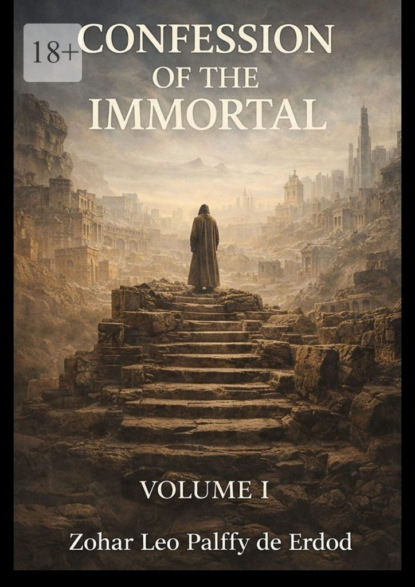
Confessions of the Immortal



- -
- 100%
- +
I watched their primitive conflicts – skirmishes with neighboring tribes over hunting grounds, women, vital resources, the right to exist. It was cruelty, yes, but it was understandable, almost logical in its primitive essence – it stemmed from the relentless struggle for survival, from the acute need to protect their territory and their kin from external encroachments, from the hostility of others. There was no malice in their eyes in the modern, refined sense, no cold calculation, only the instinct to preserve their kind, to survive at any cost, the desire to live.
So I lived among them for millennia, which for me were only a brief, fleeting moment in the endless flow of time, a drop in the ocean. I saw how they slowly, almost imperceptibly, changed, like clay in the hands of a great sculptor. How their tools became more perfect, acquiring new forms and functions, how their language was enriched with new sounds and meanings, allowing them to express more complex thoughts, how their society became more complex, acquiring new connections and hierarchies, harbingers of future empires. I was a silent witness to their first love, pure and naive as dew on the grass, and their first murder, dark and shocking as a stain of blood on the snow; their first infectious laughter, filling the air with joy, and their first tears from the realization of their own finitude, their mortality. I was their shadow, their silent chronicler, immersed in their world but always separated from it by my infinite memory, which stored the echoes of stars and forgotten worlds, and by my eternal, restless heart, whose beating marked the passing of eras.
Chapter 5: The Relentless March of Time
From Tribe to Settlement: The Dawn of Civilization
I, the Stone, rooted in the very flesh of the universe, remained an unchanging, silent witness, whose silence was deeper than any words, and whose gaze pierced the endless eons of time. Days, like grains of sand in the relentless hourglass of existence, wove themselves into months, months into years, and years, in turn, like melting snow under the unstoppable onslaught of the spring sun, dissolved into centuries, leaving only a faint trace. My being, devoid of mortal flesh and decay, knew no fatigue, and my mind, untethered to the frailty of mortals, was immune to oblivion, holding within itself the echoes of every bygone era. I continued my silent vigil, watching as slowly, almost imperceptibly, the fabric of their world changed its patterns, as the old, familiar forms gave way to new, sometimes frightening, but always meaningful meanings, born from the depths of the collective consciousness, like pearls from sea shells.
I was not just an observer, but also the keeper of an invisible chronicle of how the tribe itself underwent profound metamorphoses, how generations, like waves, rolled inexorably onto the shore of existence, leaving their mark, and then receded into eternity, giving way to new ones. The elders, whose wrinkled faces and eyes, full of centuries-old wisdom, I remembered so well, now rested in the earth, their bones turned to dust, becoming an integral part of the soil, they once trod, and their names, once spoken with reverence and respect, dissolved into the whisper of legends, finding new, mystical life in tales. Their children, and then their children’s children, grew up carrying within them fragments of that primordial wisdom that I had once observed, but adding to it their own discoveries, sometimes bitter, sometimes sweet. In this continuous flow of existence, each new generation, like a river winding its way through rocks and earth, inevitably added its own unique and unrepeatable chapter to the great, as yet unfinished book of human experience.
The Evolution of Tools and Thought
Tools, these material embodiments of their will and aspirations, became increasingly sophisticated and perfected, as if reflecting the inner growth of their inventive spirit, awakening to new achievements. The crude, unsightly flint chips that had once been a symbol of survival in the harsh wilderness gradually, step by step, gave way to more finely honed, almost artistic spearheads and arrowheads. These new, elegant creations, born of patience, painstaking labor, and skill, flew with unprecedented speed, piercing the air with almost invisible precision, which greatly increased the effectiveness of hunting, transforming it from blind luck into a deliberate art. They mastered the subtle art of making the strongest ropes, woven from animal sinews, whose incredible strength withstood the onslaught of the most violent elements; they learned to weave intricate, almost lace-like nets for catching fish, which entangled the water’s surface, gathering its generous gifts; and to build more stable boats from hollow, burnt tree trunks, capable of proudly withstanding river rapids, like small but brave ships challenging the raging elements. Each of these inventions was not just a step forward in a practical sense, but a small miracle of the human spirit, expanding their horizons of survival, giving them ever greater power over their environment, and freeing them from the oppression of pure physical strength and blind luck.
Their language, that fragile but powerful bridge between the inner world of man and external reality, also underwent profound, fundamental changes, becoming richer, more multifaceted, and more expressive. Primitive, guttural sounds, once sufficient to convey basic needs and primitive emotions, gradually gave way to complex, multi-meaning words, and words, in turn, were woven into sentences capable of conveying the subtlest nuances of thought and the most intimate, profound experiences of the soul. They began to give names not only to their fellow tribesmen and animals, but also to abstract concepts: the wind that swept across the endless steppe, the thunderstorm that erupted in the heavens with a terrifying roar, the love that bound their hearts with invisible but strong threads, and the grief that tormented their souls with unbearable pain. In this way, they laid a solid foundation for future philosophy, trying to comprehend the invisible threads of existence, to grasp the incomprehensible. Their stories, these living vessels of collective memory, became richer and richer, accumulating details, metaphors, and symbols, gaining a new, deeper life. Passed down from generation to generation, from elders to children, they formed the basis of their culture and collective identity, creating an unbreakable link between the past, present, and future. I listened to these tales, knowing their true, sometimes painful roots, their metaphorical nature, their simplification of cosmic truths, which they, in their simplicity but with an insatiable thirst for knowledge, tried to comprehend.
The Neolithic Revolution: Sedentarism and Order
Gradually, their nomadic life, once so integral and familiar, began to fade, like a smoldering ember, giving way to settlement, like an ancient custom slowly but inexorably fading into oblivion. I noticed that they lingered in one place longer, attracted not only by the abundance of game, but also by the fertility of the land and the generosity of water resources, creating ideal conditions for permanent, long-term residence. In them, like a sprouting seed, a deep, intuitive understanding of the cycles of nature was awakening: when seeds come to life, breaking through the thickness of the earth, when the river spills generously, carrying its gifts, renewing the soil, when animals come to the watering hole, heralding a successful hunt. This awareness, born of centuries of observation and invaluable experience, led to the first, tentative, almost accidental step towards agriculture. At first, it was just an unconscious, intuitive scattering of seeds thrown into the ground with the hope of a miracle, but then it grew into conscious, methodical planting and careful tending of crops, heralding a grand, revolutionary transformation that would forever change the face of the Earth and the destiny of humanity.
I watched as their tribal encampments, once ephemeral and temporary, gradually took on the characteristics of permanence, transforming into real, living communities pulsating with life. Instead of temporary, easily erected wigwams, capable of withstanding only short periods of inclement weather, more durable, stable huts made of wood and clay appeared, providing reliable shelter. Inside each hut, like a heart, beat clay hearths where fire, that eternal symbol of life and warmth, burned constantly, providing not only comfort but also protection from the piercing night cold and the threats of wild animals. Around these nascent settlements, primitive but effective fences made of sharpened stakes began to be erected, serving as protection not only from predators but also, equally importantly, from hostile nomadic tribes. These villages were no longer just temporary shelters, but real homes, places where people felt a true, deep sense of security, belonging, and community for the first time.
With the transition to a sedentary lifestyle, their social structure also changed, becoming immeasurably more complex, like a stream that, gaining strength, turns into a mighty, branching river, forming its own tributaries and currents. Specialization arose – the cornerstone of any developed civilization, without which further development is impossible. Now everyone found their own unique place in the tribe, following their calling: some honed their hunting skills, whose accurate arrows provided vital sustenance for the entire tribe; some devoted themselves to making tools, creating instruments from stone and bone that greatly facilitated labor and expanded possibilities; while others, with care, diligence, and a deep understanding of nature, tended the crops, nurturing the future. The chiefs, whose wisdom and strength had once been merely symbolic, now gained real, tangible power; their influence steadily grew, and their decisions became not just advice, but law. Shamans, those guardians of ancient knowledge and connections to the spirit world, whose connection to the unseen was undeniable, became even more authoritative, their spiritual influence growing, permeating every aspect of their lives, from birth to death. In this new, complex system, the first rules emerged, the first laws, unwritten but unbreakable, regulating their communal life and preventing the chaos that so often threatened the existence of primitive man. I witnessed their first harvest festivals, these joyful and grateful rituals that were now tied to the cycles of the Earth, and not just to hunting, reflecting their new, deep, almost sacred connection to the soil, to the mother-nurturer who gave life.
I remained the Stone, silent and eternal, whose presence, once so striking and mysterious, was now perceived as something natural, an integral part of their world, as familiar as an ancient, spreading tree providing shade, or a sacred boulder by the river that had become part of their landscape, their history. They confided their troubles to me, whispered their secrets into my granite silence, expecting no answer, simply wanting to be heard, pouring out their souls into this mute vessel. I listened to their laughter, ringing and carefree, echoing through the valley, their cries, bitter and inconsolable, carrying all the pain of loss, their arguments, sometimes fierce, sometimes conciliatory. I saw how their minds, slowly, bit by bit, accumulated knowledge that would ultimately, like an invisible force, lead them beyond the limits of their primitive society, to new, dazzling, but as yet unknown horizons.
I watched as they learned to tame animals, changing their nature, as they invented the wheel, that ingenious symbol of progress that accelerated their movement through time and space. I saw how their drawings on cave walls, these primitive echoes of their souls and dreams, turned into symbols, and symbols into the first letters, laying the unshakable foundations of writing, which became the cornerstone of their entire future civilization. I felt the Earth shifting beneath my feet, the layers of history shifting, opening up new eras, and I understood that soon this era, the era of innocence and primitivism, would come to an end. My students, who were unaware of my teacherly gaze and silent observation, were ready to take the next decisive step in their endless but finite mortal journey, a step into the unknown, into the future they themselves were creating.
Chapter 6: The Birth of Civilization
The millennia that flew by like a sigh of eternity in my immeasurable, boundless memory were, for a fragile, mortal human being, an entire era that encompassed countless generations – from the cradle to the grave, from the first spark of consciousness to the last fading breath. I, the Stone, a silent witness, an integral part of the earth itself, watched as their primitive settlements, these modest, almost fleeting clusters of huts woven from rough wood and primitive clay, slowly but inexorably grew. They ceased to be mere temporary shelters, becoming something greater than the sum of their parts, living, breathing organisms – harbingers of the cities to come. Hundreds, then thousands of human destinies intertwined in these crowded, vibrant settlements, and with each new household, each new family, life became unimaginably more complex, needs more diverse, requiring unprecedented solutions, giving birth to new systems, new hierarchies. I was among them, invisible and inaudible, but my invisible, all-seeing eyes absorbed every change, every subtle detail of this great, continuous transformation.
The earth, once only a generous provider, now demanded labor, ingenuity, almost ritualistic worship in return. I saw how people, driven by the instinct for survival, that ancient, inexorable call of the species, learned to control the most rebellious of the elements – water. Great rivers, once only insurmountable borders or formidable obstacles, now became an inexhaustible source of prosperity, a lifeline breathing life into arid lands. They built simple but ingenious canals, diverting life-giving moisture to the fields, creating the first irrigation systems – evidence of collective intelligence and will. These modest but essentially monumental efforts, embodied in clay and stone, brought unprecedented harvests, generating abundance that forever erased the line between primitive, cyclical life and a new, emerging era, an era of deliberate creation.
A surplus appeared – not just random leftovers, but a conscious accumulation, a foundation, a guarantee of stability and predictability. There was enough food not only to sustain existence itself, but also for exchange, for the creation of strategic reserves capable of surviving the longest and harshest times of famine. It was the dawn of trade – not just the exchange of goods, but also the exchange of ideas, skills, and the soul of society; it was the circulatory system of the new organism of civilization. I saw how travelers from different settlements, once divided but now not necessarily hostile, carried their treasures: sparkling salt from distant, sun-scorched salt lakes, rare stones that held the beauty of future jewelry, and soft skins from skilled hunters. They exchanged them for grain, ceramics, and handicrafts, unaware that along with the goods, like invisible seeds, came new ideas, new words, and new ways of organizing life. The world, once vast and unexplored, began to rapidly shrink, ties between tribes strengthened, giving rise to larger, interdependent communities, the first outlines of nations.
Construction took on a new dimension, becoming not just a craft, but an art and a science, the embodiment of humanity’s quest for eternity. Instead of ephemeral huts, doomed to decay under the onslaught of the elements and time, monumental structures of stone and fired clay sprang up. Their walls were as solid as the earth itself, their structures as durable as a promise of eternity, a challenge to the transience of existence. Houses rose two stories high, with inner courtyards where the lives of many generations bustled, from infants to the elderly, each with their own role in the grand design. Communal granaries appeared – repositories not only of food but also of hope, symbols of collective security – and majestic temples, their silhouettes towering above the other buildings like hands reaching toward the heavens, toward the incomprehensible. Roads, once barely visible paths trodden by feet and hooves, turned into wide, well-trodden arteries connecting settlements, facilitating trade and the spread of new ideas.
I witnessed villages, as if enchanted by an unknown force, grow into the first cities. These were not just clusters of people, but complex, multifaceted organisms, where each element performed its own indispensable, vital function. Here lived not only those who cultivated the land or hunted game, but also new strata of society: artisans – blacksmiths, whose hammers beat out the rhythm of a new era, transforming amazing copper and bronze into tools and weapons, giving them form and purpose; potters, whose skilled hands molded beautiful and functional dishes from malleable clay, breathing life into them; weavers, who turned fibers into clothing and fabrics, clothing people with new dignity and status. Rulers appeared – not just hunting leaders, but those who had the gift of managing dozens, hundreds, and then thousands of people, organizing their labor, collecting tribute, resolving endless disputes, creating the first, still fragile but already authoritative forms of statehood.
With this new complexity, with this complication of the social fabric, came new challenges, new tensions, new facets of human nature. Laws, previously unwritten and passed down by word of mouth, became stricter, engraved in stone, and punishments became more severe, reflecting a growing, sometimes desperate, need for order, for control over chaos, over individual will. Warriors emerged from the general masses – professionally trained, whose hands were ready to defend the city or conquer new lands, expanding the borders of influence, shedding blood for the future of the empire, for its myths and its riches. I saw how walls, majestic and formidable, grew around cities, becoming a symbol of their new power and their new fears, their desire to protect themselves from external threats, from the chaos that lay beyond their borders, from envy and hostility.
I continued my journey among them, never staying in one place for long, changing my appearance so as not to stand out, blending in with the continuous, seething flow of life. In the city, I was a mason whose strong but careful hands built temples, whose intuitive knowledge of materials allowed him to create the eternal, giving stone the shape of thought. I was a merchant, bringing precious goods from lands where mortals hardly dared to tread, crossing waterless deserts and impassable mountains, leading caravans through unexplored expanses, becoming a bridge between worlds. I was a scribe when writing appeared – the greatest invention, capable of preserving knowledge not only in the fickle, easily forgotten human memory, but also on clay tablets, on fragile papyrus, on durable parchment, making them immortal, accessible to future generations. I saw how their ideas, their myths, their laws took on a physical form that could be passed down through the centuries, forming a collective consciousness, like an invisible fabric connecting all parts of civilization.
But the more complex and confusing their world became, the more rules appeared, the tighter the social hierarchy became, the deeper the rifts between classes grew, the less I could exist in it as “Stone.” My silence, my detachment, once perceived as normal, as part of my nature, as a sign of wisdom, now made me suspicious, raised questions, and caused fear of the unknown. In a world where everyone had their role, their place in a complex hierarchy, I, with no family, no attachments, no past, was an anomaly, an outsider, like a fragment of antiquity in a new, turbulent, sometimes cruel world that did not understand its own history.
I saw how empires grew out of the first cities, like mighty, unstoppable trees, their roots going deep into the ground, feeding on the power of the conquered territories, and their branches spreading over endless expanses, touching the horizon itself. I witnessed one people conquering another, great leaders whose names resounded through the centuries and whose deeds remained carved in stone rising to the heights of power and falling into dust, leaving behind only ruins and legends whispering of past greatness and the futility of all things. I watched the birth of religions, those complex belief systems that carried their thoughts to the heavens, creating pantheons of gods, often as imperfect as humans themselves, reflecting their own vices and virtues in the divine. And the more they built, the deeper they delved into the mysteries of the universe, the further they seemed to stray from that primitive simplicity, from that original, pure connection with nature from which they once emerged, and which I, the Stone, kept forever in my memory.
My loneliness continued to deepen, becoming not just a state of being, but an integral part of my nature, my essence. In this complex, turbulent life, where everyone was desperately searching for their place, their meaning, their purpose, I was no one and everyone at the same time – a Stone that had seen everything, that had absorbed the experience of millennia, but was not part of anything, only a silent, eternal witness to the endless drama of human existence, its greatness and its fall.
Chapter 7: New Challenges
Information Overload and Loss of Connection
When humans stepped out of the shadows of primeval forests and desert steppes into the light of city walls, my life, hitherto unshakeable in its eternity, faced challenges whose true depth could not be grasped by the transience of human existence or the silence of the stone in which I dwelled. Century after century, millennium after millennium, the world was rapidly changing. From small settlements, barely discernible in the wilderness, grew majestic cities, and then vast metropolises, whose walls and towers soared toward the heavens like frozen waves of human ambition, reflected in the mirror of fleeting grandeur. Civilizations, like the ebb and flow of the tides, replaced one another at a dizzying, almost unimaginable speed: from the monumental pyramids of Egypt, erected for the eternal pharaohs, to the marble colonnades of Greece, where philosophy was born; from the grandiose aqueducts of Rome, carrying water and life, to the finest frescoes of Byzantium, shimmering with gold in the twilight of cathedrals. Each era left its indelible but fleeting mark, burning the writings of its triumphs and falls into the face of the Earth. This whirlwind of change exposed the imperfection of my ancient methods of survival and observation, born in an era where threats were tangible and understandable, like the fang of a predator, the cold of the night steppe, or the whistle of an arrow over my head.
The main one of these new, silent enemies was the relentless overload of information, pouring down on me like a waterfall of meaning and nonsense. In a tribal community, where every whisper of the wind in the treetops, every movement of a leaf in the gust of the elements, every sigh of a tribesman carried a deep, vital meaning, the world was simple and clear, its symphony consisting of few but deep and pure notes. In the seething crucible of the city, however, the noise became a constant, deafening background, depriving one of peace, penetrating the most hidden corners of consciousness. The din of the crowd, like the surf of human voices, washed over the streets, sometimes rising to a frenzied roar in the market squares, sometimes subsiding to a monotonous hum in the evening hours. The creaking of wooden cart wheels laden with goods sliding over cobblestones polished by centuries echoed in the narrow alleys, mingling with the piercing squeals of pigs being driven to slaughter and the suffocating smell of soot from burning torches. The insistent pounding of blacksmiths’ hammers, creating tools and weapons, drowned out the rustle of thought, and the endless, insistent cries of merchants offering their wares, whether fresh fruit or exotic spices, pierced the air like a flock of crows. My senses, honed by millennia of contemplating the subtlest nuances of nature – the barely perceptible rustle of leaves, the ominous rustling of a beast in the thicket, foreshadowing danger – were now overwhelmed, like a fragile musical instrument subjected to the onslaught of a disproportionate, crushing force.