

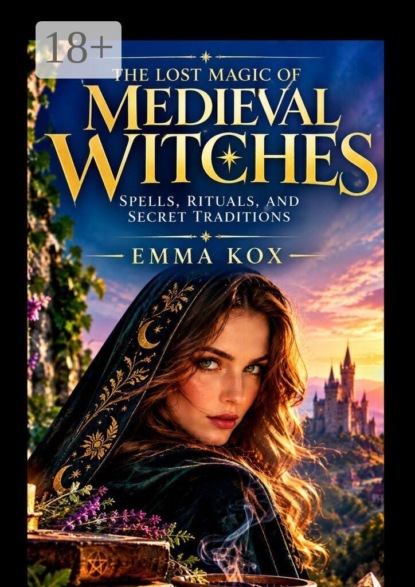
The Lost Magic of Medieval Witches: Spells, Rituals, and Secret Traditions


- -
- 100%
- +
For instance, the alchemical process of blackening (nigredo) corresponds to the “death” of the ego and the purification of the base elements of the self. The whitening (albedo) stage represents the illumination of the mind, symbolizing the ascent to spiritual clarity and enlightenment. Finally, the reddening (rubedo) stage is seen as the attainment of spiritual perfection, akin to the transformation of the alchemist’s soul, symbolized by the creation of the Philosopher’s Stone.
In this way, Kabbalistic practices and ideas heavily influenced the development of Western alchemy and magical traditions, providing a spiritual framework that combined both material transformation and spiritual ascension.
Kabbalah and Alchemical Philosophy
— The Theory of Tzimtzum (contraction) has a direct reflection in alchemy. In alchemical philosophy, there is also a concept of “contraction” that occurs during the transformation of matter, as something happening in the depths of the alchemical work.
— Alchemists used Kabbalistic symbolism to explain alchemical processes. For example, the use of light and darkness, fire and water as symbols of opposing forces that unite during the process of spiritual ascension.
Kabbalah had a profound influence not only on magic and alchemy but also on Western philosophy, literature, art, and even psychoanalysis. It significantly impacted philosophical movements such as Gnosticism, Neoplatonism, and Rationalism. A striking example is the philosophy of Pico della Mirandola, who sought to merge the philosophy of Plato with Kabbalah, believing that an understanding of Kabbalah could provide deep insight into human nature and the Divine.
Renaissance artists and writers were also inspired by Kabbalistic teachings. Kabbalah influenced the creation of images that symbolized hidden meanings. In Renaissance paintings and architecture, symbols such as the Tree of Life, the Sefirot, and geometric figures were often incorporated, all of which were part of the Kabbalistic concept. In literature, Kabbalistic symbolism can also be found. For example, the works of Jonathan Swift, Voltaire, and many other authors of the Renaissance and Enlightenment contain references to Kabbalistic and Hermetic philosophy, utilizing esoteric symbols and concepts.
Contemporary scholars link Kabbalah with psychoanalysis. For example, psychologists like Carl Jung found parallels between the Kabbalistic system of the Sefirot and the archetypes discussed in psychoanalysis. Jung and other psychoanalysts used Kabbalistic concepts to understand the development of the human psyche and the role of spiritual growth in the process of healing and self-awareness. Today, Kabbalah remains relevant, especially due to its popularization among a broader audience. In recent decades, thanks to books and influential authors (e.g., Rabbi Lightman and his school), Kabbalah has gained significant interest and attention from people seeking spiritual growth and understanding. Many of these practices and teachings have been adapted for modern times and can be used for self-improvement.
Modern Kabbalistic practices often focus on its philosophical and spiritual aspects. Rather than solely concentrating on magic or mystical teachings, contemporary Kabbalists aim to integrate Kabbalah into personal life through meditation, prayer, and deep self-understanding. In recent times, Lurianic Kabbalah has become particularly popular, as it continues to explore the deeper concepts of Kabbalah and serves as the foundation for many contemporary spiritual practices.
Modern Kabbalistic practices are often associated with personal and spiritual development, a desire for self-awareness, and harmony with oneself and the world. For many people, Kabbalah is not just a philosophical system but a path to profound spiritual enlightenment. Modern Kabbalistic schools often teach how to use its principles to improve life quality and achieve inner balance. Kabbalah teaches that an individual can be in a constant search and understanding of hidden truths about themselves and the world. In this context, there are various meditative practices that allow one to connect with higher levels of consciousness and recognize their inner nature.
One of these practices is meditation on the Tree of Life, where each of the 10 Sefirot symbolizes different aspects of human nature, such as intellect, emotions, willpower, harmony, and wisdom. Through a deep analysis of each of these levels of consciousness, one can strive for spiritual perfection, unlock their potential, and understand their connection to the Divine. Kabbalistic meditation can be highly diverse, incorporating both mental practices and exercises designed to enhance intuition and spiritual perception. In some practices, sacred names of God and other Kabbalistic symbols are used to influence the subconscious and open new levels of reality.
Many Kabbalistic practices use symbolism to achieve harmony in spiritual life. For example, the use of the Tetragrammaton (the sacred four-letter name of God) or seals of angels and archangels helps deepen the connection with higher powers. All these elements can be found in meditative practices, where they serve as tools for communication with the Divine. One of the central themes is meditation on light. In Kabbalah, light is viewed as divine energy capable of purifying and enlightening. Thus, meditation on light and working with it are key techniques used to achieve inner illumination.
Many psychologists view the Tree of Life as a model of the human personality. In this model, as in life, every individual goes through certain stages of inner development. Each level (Sefirot) corresponds to a specific stage in the maturation of the personality, where a person faces internal conflicts but, at the same time, discovers new horizons. Thus, Kabbalah not only offers methods for spiritual purification but also becomes a tool for self-awareness and personal psychotherapy. By applying its methods, a person can rid themselves of internal blocks, understand their emotions, fears, and desires, and achieve harmony with themselves.
For many centuries, Christianity has actively interacted with Kabbalah, especially in the Middle Ages when Kabbalistic teachings infiltrated the spiritual life of Europe. Christian mystics and theologians such as Johann Trithemius, Christopher Columbus, and Moses Mendelssohn actively used Kabbalistic symbols and concepts in their works. In Christianity, Kabbalah is seen as a way to understand deeper meanings of sacred texts and as a method of communication with divine forces. Christian Kabbalists used systems of numbers and letters to interpret biblical texts and for spiritual improvement.
For Orthodox Jews, Kabbalah represents an essential part of religious life; however, it has always been regarded as an esoteric teaching meant only for a select group of people — those who possess deep spiritual preparation and maturity. In traditional Judaism, Kabbalah is used to grasp the Divine order and understand how one can approach the Creator.
In Islamic mysticism, especially in Sufism, Kabbalistic ideas can also be traced. For instance, Sufi practices such as meditation, prayers, and reflections contain similar elements to Kabbalistic techniques. In both traditions, the emphasis is on the search for inner light and drawing closer to God through personal spiritual experiences.
Modern interpretations of Kabbalah often range from strict academic approaches to more liberal and adapted teachings available to a wide audience. Thanks to its popularization in areas like psychology and esotericism, Kabbalah has become accessible to a broader circle of people. It has drawn the attention of public figures such as Madonna, who even took up studying Kabbalah, sparking additional interest in the teaching. Today, Kabbalah is actively studied not only in religious contexts but also within self-awareness, personal growth, and spiritual practices. In this context, it continues to serve as a source of profound wisdom and understanding of human existence.
Kabbalah is a multifaceted and layered system that encompasses aspects of magic, philosophy, psychology, and religion. Its deep teachings about the nature of God, humanity, and the Universe continue to inspire and influence people worldwide. It serves as a tool for personal transformation, self-awareness, and the search for inner harmony and balance. The influence of Kabbalah on mysticism, alchemy, philosophy, and even psychotherapy has persisted for centuries, and today it remains an important element in spiritual practices.
Kabbalah features numerous practices and rituals that help individuals establish a connection with divine forces, develop inner harmony, and achieve spiritual enlightenment. These practices include both meditations and specific prayers, incantations, and rituals that carry profound symbolism and are aimed at purifying the consciousness and connecting with higher realms. Let us take a closer look at the main incantations, prayers, and rituals of Kabbalah.
1. Kabbalistic Incantations
Kabbalistic incantations are special words or phrases used for magical influence or spiritual purification. Often, they are associated with specific names of God, angels, or symbols that have particular significance within the Kabbalistic system.
Incantation for Protection from Evil
One of the most common incantations in Kabbalah is used for protection against negative forces and spirits. It often involves phrases containing sacred names of God, such as Jehovah or Elohim.
Example of a Protection Incantation:
“The strength of God protecting me, may it always be with me. Let the light of the holy name protect me. Angels who serve the Lord, be with me. Depart, dark forces, and do not dare approach me!”
This incantation is aimed at strengthening the individual’s protection against external evil and internal fear, as well as obtaining spiritual strength.
Incantation for Purification
Kabbalists also use incantations for purification, to rid themselves of negativity, and to heal from mental and physical ailments. These incantations often feature phrases related to the cleansing of light and energy.
Example of a Soul Purification Incantation:
“O, holy light, cleanse me from all that disrupts my inner world. Let my mind become as clear as a bright crystal, and my soul as pure as transparent water. May divine light fill me!”
Конец ознакомительного фрагмента.
Текст предоставлен ООО «Литрес».
Прочитайте эту книгу целиком, купив полную легальную версию на Литрес.
Безопасно оплатить книгу можно банковской картой Visa, MasterCard, Maestro, со счета мобильного телефона, с платежного терминала, в салоне МТС или Связной, через PayPal, WebMoney, Яндекс.Деньги, QIWI Кошелек, бонусными картами или другим удобным Вам способом.