



- -
- 100%
- +

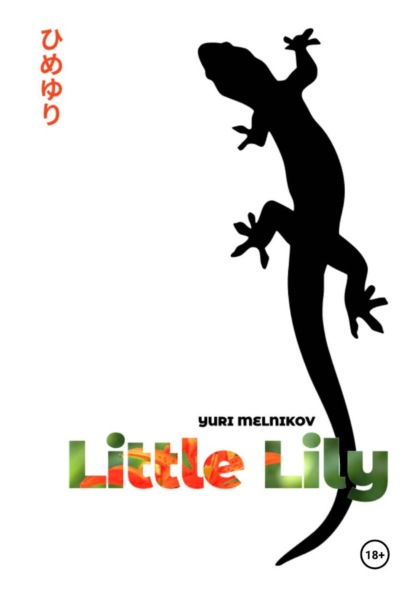
Little Lily
I repeat your name
At night in the silent dark,
and it sounds so far away,
as it has never sounded before.
This name is further than the stars,
and sadder than the weary rain.
– Federico García Lorca
Prologue
She sat on a warm stone. The stone remembered the morning – remembered how the first ray of light had touched its rough surface, how the dew had lazily trickled down its sides, vanishing into the dry earth, how it had begun slowly, drop by drop, to absorb the blinding zenith light. And now, by noon, it harbored so much dense, heavy heat that one could boil an egg on it, if anyone in this world had an egg, and if anyone wanted to boil it, and if there existed anyone at all besides herself.
But there was no one. There was only the stone. There was the sun, resting on her shoulders like a heavy gold coin. There was a scent – dry, slightly bitter, like the exhalation of an earth that had long ceased praying for rain and had forgotten the names of its gods. The grass didn’t smell like grass; it smelled like the memory of grass: whatever remained of the stems after months of drought and sweltering heat – dust, in which the barely perceptible, ghostly spirit of wild mint and wormwood still lingered. Somewhere far away, perhaps beyond the hill, perhaps beyond the sea – she did not yet know what a sea was, but she felt its subtle, corrosive seed of salt in the air – somewhere far away, something massive was burning. The smoke was not visible, the sky remained ringing and transparent, but her nose caught it: a faint, ancient bitterness, as if someone had placed a glowing coal, oozing an anthracite gleam, on the very edge of the horizon.
She did not remember how she had ended up here. It felt as though she had always sat here, her arms wrapped around her sharp, dry knees.
The boulder she had settled upon was not alone. All around, as if halted halfway between becoming a mountain or crumbling into dust, lay others – gray, rusty, threaded with white quartz that looked like lightning frozen in time. They were all warm, each in its own way: one like a mother’s palm smelling of rice flour and soap, another like the hot breath of a dog, a third like cheeks after a long, frenzied fit of weeping, when the tears are gone but the fever remains. Dry little bushes grew between the stones – hyssop, perhaps, or some thorny scrub – whose stems were thin and springy as rusted wire, their tiny leaves carrying a scent so pungent it made one want to sneeze and cry at the same time.
Then she saw the lizard. It lay on a flat stone – slightly to the left and just above her hand – drinking the sun. It looked like a miniature dragon, cast from old malachite dust and liquid, darkened bronze. Its emerald scales caught the rays, turning them into blinding, microscopic sparks. It lay so motionlessly that for a split second, the girl mistook it for an primordial carving etched into the rock: the same grayish-brown underside, the same dark speckles, the same tiny, almost inhuman pattern. But then the lizard blinked – a single, instantaneous, translucent contraction of a leathery membrane – and the girl understood: it was alive. Time pulsated inside this tiny body.
The girl did not move. She knew – not from anyone else, not from words in a book, but from the very fact of her own presence here, in this merciless light – she knew she had to be quiet. Quieter than silence itself. Quieter than a shadow creeping over grains of sand.
The lizard was basking. Its body lay sprawled across the stone with that absolute, eerie trust accessible only to creatures with cold blood. It let the noon enter it – through its scales, through the bony plates of its skull, through every delicate little joint in its tail – and transformed this heat into movement, into pure life, into an underlying capacity to vanish into a crevice in the blink of an eye if the world suddenly became unsafe. But for now, the world was not unsafe. The world consisted of warmth, stone, and the scent of wormwood. The world was beautiful.
The girl looked at the lizard and saw everything with a frightening, almost agonizing clarity: The five toes of each tiny paw, pressed against the rough quartz – with barely visible suction cups at the tips, like poppy seeds; The flanks, which moved – ever so slightly, yet continuously – sending fine ripples across the scales like a mirror of water into which an invisible strand of hair has been dropped, only in reverse: not from the top down, but from the inside out; The tail. Long, elegant, trailing away from the body like a sentence someone hadn't had the time or the energy to finish – it lay on the stone in a perfect arc, each scale casting its own separate, miniature shadow; And the eyes. Two round, bulging, yellow eyes with vertical slits for pupils, holding neither thought nor fear – nothing but a readiness to leave. To flash and vanish.
The girl thought about the proper way to be a lizard. How wonderful it must be – to bask on a scorching boulder and know that you are an extension of this boulder, and a part of the sun, and a part of the dry wormwood wind, and that there is no difference between your body and this world, because you are simply one of the places where the world has decided to become thick and tangible for a fleeting moment.
She reached out her hand – slowly, the way a figure moves on a mountain trail far in the distance – not to touch, but to feel, simply to get closer – and her fingers, smeared with gray limestone dust, hovered in the air.
And then came the Sound. It came neither from the right nor the left; it came from everywhere – from above, from the faded blue, and from below, from the granite depths. It was not thunder – she would have recognized thunder; she remembered thunder with her entire body, remembered how the air suddenly turns into an iron wall and strikes your chest, your ears, knocking out teeth and thoughts. This was something else. A collapse. A strained, visceral cracking of the tearing fabric of the world, splitting along some invisible, ancient seam – as if a massive, unseen hand had gripped the mountain itself and snapped its spine in two.
The stones around her began to hum with a dull, terrifying rumble. The earth sent a dry, fine vibration into her tailbone, her thighs, the very base of her skull – not loud, but so deep that the sound was perceived not by the eardrums, but by the spine itself. Somewhere – close, behind her or deep within the cliff – a massive stratum shifted, tore loose, and crumbled into dust, and from this invisible destruction, the air was instantly filled with stone powder. It had no taste, but it possessed a heavy density: it settled on her dry lips, on her eyelashes, on her open, frozen palms.
The birds. They rose all at once – not a flock, not two – but every single feathered creature that had been hiding until that moment in crevices, in thorny bushes, on ledges. Their cry was neither song nor chirp – it was pure, dry, inarticulate terror, transformed into an ultrasonic wave. They shrieked the way creatures shriek in the face of utter annihilation, creatures that have no words and therefore no ability to lie or comfort themselves. Their cry was true – hopelessly, absolutely true – and from this dense truth the air thickened, grew matte, and for a moment, the sun overhead dimmed.
The shadow. It fell upon the stone swiftly and ravenously – not like a ordinary cloud, but like the plummeting of something heavy and unseen. It was not simply a darkening; it was a collision of cold and heat. The shadow was thick, almost anthracite, devoid of gradients or halftones – an absolute, impenetrable impossibility of light. A sudden, sclerotic chill of a crypt swept over the rock.
The lizard vanished. No, it wasn't a disappearance. An unforgotten, immutable law triggered in its primal brain: to stay alive, you must be able to sever a part of yourself. You must leave the world the very thing it is trying to use to hold you. There was a barely audible, wet, brief snap – the sound of living fibers tearing. An emerald-bronze lightning bolt darted into a dark, saving crevice between the stones. But the tail remained on the boulder.
It was not dead. It writhed, bounded, violently and rhythmically thrashing against the gray stone, dancing its own mad, death-throe dance. In this tiny stump of flesh, in this scaled ribbon, there was so much desperate, thrashing, blind energy, as if it were trying to deceive the fallen shadow, to take the entire blow upon itself while the lizard quieted deep in the fissure. This was pure physiology elevated to the absolute of beauty: the rhythm of nerves that had not yet realized they no longer belonged to anyone. The tail arched like a plucked string that still trembles, remembering its final, highest note.
The girl gasped. Shock pinned her in place, but then she slowly reached out her hand, as if obeying another’s will. Her fingers carefully closed around the thrashing piece.
It rested in her palm. Warm. Weightless. Convulsively restless – its tip still quivering like a thread in the wind. She felt it with every cell of her skin, every receptor on her fingertips, how smooth and hard-cold the scales were on the curves, and how the living, tender, pinkish skin showed between them – wet, like the tip of a tongue.
And then the smell caught up with her. It wasn't blood – lizards do not smell of iron and human slaughter. It was a different scent – delicate, dry, like a snapped green branch, like the sap that oozes at the site of a violent rupture. The scent of parting. The scent of how the living leaves a part of itself behind to keep breathing.
She looked at the tail. It had no eyes, but it lay in her palm so trustingly and heavily, as if it were the most precious offering. Finally, the tip stopped twitching. The last spasm subsided, leaving only warmth.
The girl looked up. The crevice where the little emerald dragon had taken refuge was bottomless and silent. Not a sound came from it.
The stone dust slowly settled, swirling in invisible air currents. The birds fell silent, retreating into their rocky burrows. The sun returned – exactly the same as it had been before the sound, before the terrible shadow and the birds' cry. The boulder beneath her once again swelled with golden heat, the wormwood smelled just as bitter, and on the very edge of the earth, the invisible coal smoldered just as smokelessly.
She closed her palm – slowly, carefully, the way one closes an old, sacred book – and pressed her fist to her chest, right against her beating heart. She did not cry. She did not smile. She simply sat on the scorching stone in the middle of an endless 'now,' holding what was lost, knowing that this loss was the most real and honest thing she had left.
Then sleep fell upon her. Thick and warm, like a woolen blanket.
And when she woke up, her palm was empty. The tail had vanished – carried off by the wind, by ants, or by the earth itself. But on her skin remained two thin, semicircular imprints of scales, pressed so deeply into the flesh it was as if they were a seal. Or a brand.
She stared at these marks for a long time, until the sun dipped below the peak of the cliff and a long, cool shadow fell across her lap. Then she stood up, brushed the dust from her hem, and started walking.
Where to? She did not yet know.
Chapter 1. Awakening
The blade curved like the beak of a bird of prey, and for a fleeting second, it caught the blinding, white sun – caught it so sharply, flared so brightly, that the eye inside the dream began to ache.
She stood in the yielding, cool shade of a stone archway, seeing everything around her with that terrifying, crystalline clarity that only comes a second before you wake up. The man – tall, with a face weathered by desert winds to the color of old, darkened bronze – stepped toward the man in light robes. His movement was flawless in its lazy grace, almost tender, almost loving: his hand slipped easily, effortlessly into the folds of rough wool on the other man's chest, and the metal entered the flesh with a strange, soft, rustling sound, as if a knife were slicing through an overripe melon. It was a triumph of pure geometry, an ideal, self-contained act of the merging of steel and human warmth. Instantly, petal by petal, a wet scarlet chrysanthemum began to bloom on the faded, unbleached cloth. It grew, pulsating with the very life that was leaving the body right at that moment to become a simply unbelievably beautiful, symmetrical stain on the fabric. And it smelled of hot iron, bitter copper, and scorching dust that scratched the throat.
The man with the bronze face turned around. His eyes, black and dry as sun-cured olives, met her gaze, piercing right through her, through the thickness of centuries and someone else's memory.
“Run!” his cry tore through the ringing midday silence of the square, like tearing thick silk. “Tamar! Run!”
And she ran. The narrow streets, squeezed by white limestone, rushed to meet her. The air burned her throat, smelling of fermented honey and overripe figs that burst beneath her bare feet. Her feet pounded against the scorching, uneven stone; her soles burned, but stopping was impossible, because behind her – she felt it not with her ears, but with the skin between her shoulder blades – something massive, heavy was moving, making the walls of the houses terrifying tremors. She dashed forward, her shoulders knocking aside woven baskets, and dark purple fruit oozing sweet juice spilled under the wheels of unseen chariots. She ducked into a blind alley, and bright, damp, freshly dyed fabrics hung from wall to wall struck her in the face: carmine-red, rich saffron, piercingly blue cloths entangled her, stuck to her lips, blinded her, suffocated her, stripped her of her name...
“Nakayama. Wake up. Do you hear me? Wake up.”
The blue fabric of the dream instantly turned rigid, gray, and cold. It no longer smelled of figs or oriental spices. It smelled of sour, days-old sweat, rotten straw, and an underlying, sticky fear.
Yuriko opened her eyes and inhaled convulsively, with a rasp, as if surfacing from the bottom of a deep, abandoned well. Miko’s thin, icy fingers still gripped her shoulder in a deathly hold, biting straight to the bone through the filthy fabric.
“Get up,” Miko said. Her voice was flat, dry, and empty, like an overturned terracotta bowl from which every last drop has been drunk. “Get up, Yuriko. They are here.”
All around was not a sun-drenched ancient square, but Ihamigama – a cave that had become the Third Surgical Hospital of the Okinawa Prefecture. The gloom here was not merely the absence of light; it was a dense, porous, tangible entity that pressed against the eardrums and smelled so foul that a heavy, sour nausea constantly rose in the throat. This sickening, sweetish stench of gangrene and decaying living flesh mingled here with the sharp, nostril-burning reek of chloride of lime, stagnant urine, carbolic acid, and raw earth churned by explosions. Water dripped from the invisible, moisture-oozing stone vault with the monotony of a broken chronometer. Drip. Drip. Drip. The sound ate into the subconscious, ticking away the seconds of other people's lives.
The girls – students of the First Women’s School – sat huddled together in the damp darkness, clustered in heaps like freezing, terrified nestlings. Their school uniforms, once immaculately neat with sailor collars and starched blouses, were now stiff with ingrained dirt, clay, and dry, brown, alien blood. They were children – ordinary fifteen- or seventeen-year-old girls from the village of Mawashiasato, with sharp knees protruding from hunger, thin necks, and cracked lips bitten to the flesh. They were shaking – not from the cold, though a tomb-like, bone-chilling dampness filled the cave – but because the fear inside them had outgrown the stage of tears and hardened into a dull, numb stupor.
In the center of the cave, illuminated by the trembling, dying beam of a kerosene lamp, stood their teacher. His face, once round and kind, had sharpened over these weeks, turning into a skull stretched with yellowish parchment skin. His round-rimmed glasses were askew, the lenses covered in a web of tiny scratches and limestone dust, but he didn't notice. Here, beneath these low vaults, he seemed too large and too straight – a man who had already made a decision and was now carrying it like a tombstone.
“Girls,” the teacher said. His voice creaked and stumbled like an un-oiled door hinge, but in the silenced cave it echoed up to the ceiling, bouncing off the wet walls. “Listen to me carefully. Our duty... The Himeyuri unit is disbanded. Orders from headquarters. The Army can no longer hold this line and protect you.”
A quiet, collective, convulsive sigh swept through the cave – like the rustle of dry leaves caught in an autumn wind. Those who had been sleeping woke up. Those who had been quietly moaning on rotting mats in the depths fell silent. Duty was over? To them, who had considered their work in the hospital as something eternal and unbreakable, this "over" sounded as if they had been told the sun simply wouldn't rise over Okinawa tomorrow.
“You know who is coming here,” the teacher continued, and for a moment a mad, feverish fire flashed in his eyes, drowned in their dark sockets. “The Americans. Long-nosed demons. They will spare no one. If they take you alive... what they will do to you will be a thousand times worse than death. They will dishonor you, tear your bodies to pieces, and throw you to the dogs. You are daughters of the Emperor, students of the First School. You must not surrender.”
He turned and lowered a heavy canvas backpack to the stone floor. From the bag came a strange sound – dull, dry, purely ceramic. Like ceramic pots clinking against each other at a bazaar.
The head nurse, her face as white as chalk, began passing these round, rough objects through the rows. When Yuriko’s turn came, her hand reached into the sack, and her fingers bumped against something cold and weighty.
“This is a grenade,” the sensei said quietly, almost soundlessly. “Type 4. You know how to use it. A weapon of despair.”
It was not made of iron. It was a round orb of coarse, baked, dark-brown clay, covered in a thin layer of rough glaze, about the size of a large Okinawan orange. They weren't made in military factories, but in pottery workshops, by hand, when the Empire ran out of metal.
“And one more thing,” the teacher pulled small paper packets from his pocket, rustling in his trembling fingers. “This is cyanide. In case the grenade misfires. Over there, by the exit, in the kitchen, there are two milk cans with condensed milk left. You can... add this in. Stir it. And drink it. It will be easier that way.”
No one cried. The word “milk” – the only peaceful, sweet word from a past life – sounded here like a terrible, absurd joke.
“Teacher...” the voice of a girl from the corner of the cave, where the most severely wounded, the amputees, lay, trembled so violently that her words broke. “What about the wounded? Are we leaving them? What will happen to them?”
Minato Kobayashi froze for a second. His hands, holding a ceramic orb, shook harder, but he did not turn his head toward the gloom, toward the pus-oozing mats where people with torn-open bellies were wheezing.
“They,” he replied dryly and abruptly, “will have their own choice too.”
Yuriko looked down at her uniform. Her fingers automatically, with a sort of domestic neatness, began to smooth out the crumpled sailor collar, to button the surviving buttons of her blouse. It was unbearably absurd: the world was collapsing, the walls of the cave were shuddering from the distant strikes of naval artillery, and they were straightening their clothes as if preparing for a calligraphy lesson. Beside her, without uttering a word, Miko hid her ceramic grenade in the deep pocket of her dark hakama. The white ribbon in her hair was gray with dust, but tied in a perfect, precise bow.
“Let’s go,” the sensei ordered.
And they ran.
The exit from the Ihamigama cave didn't just let them out – it literally spat them outside, right into the gaping, boiling maw of hell. The sky over Okinawa wasn't blue; it was the color of clotted, baked blood, ripped open by black pillars of greasy smoke. The entire island shook, shuddering beneath their bare soles like a giant wounded whale that had just taken a thousand harpoons in the back all at once.
The jungle absorbed them instantly, swallowing them whole as muddy water swallows a thrown stone. The air outside proved stifling, hot as tropical broth; it was so humid that Yuriko’s blouse was soaked in seconds, turning into a thin, sticky film glued to her body. This air smelled of ash, cordite, shredded pandanus wood, and the sweet, suffocating, nauseating stench of rot – the stench of hundreds of bodies that had been lying in these thickets for days. The sounds of explosions merged into one continuous, droning metallic chord that vibrated their teeth and bones.
They dashed through the chaos of greenery. Enormous fern leaves, resembling the bony ribs of prehistoric fish, violently whipped their faces, leaving sticky green streaks. Time here lost its linearity: it would stretch, turning every step into an endless, viscous torture, then race at a gallop, confusing yesterday, when the birds still sang, with today, where there was nothing but death.
The girls scattered through the brush like pearls from a snapped thread. Yuriko saw it happen ahead, some twenty meters away: right on the path, a blindingly white, silent sphere of an artillery shell flared up. Two fleeing figures in school skirts simply dissolved into that flash, ascending to the zenith along with a pillar of red Okinawan clay, turning into dust, into nothing, in a split-second of pure destruction of life. Yuriko didn't even have time to feel afraid. She merely registered it with her eyes and kept running, feeling the two grenades in the pockets of her hakama battering her thighs – heavy, rhythmic, like a second and third heart.
They stopped only when their lungs began burning from the inside with live fire, and the air in their chests felt like crushed glass. The roar of the artillery here, on the slope of the hill, had become slightly muffled, bogged down in the dense thickets of banyan trees.
They were left alone. Only Yuriko and Miko. The other silhouettes had melted away into the green hell.
Breathing heavily, with a rasp, Miko leaned against the trunk of a tree through a fissure in its trunk, white sap resembling milk slowly oozed. Her face was completely covered in black soot and grime, making the whites of her eyes look unnaturally enormous, almost bottomless. She thrust her hand into her hakama pocket and slowly, as if disbelieving her own fingers, withdrew the ceramic orb of the grenade.
Yuriko froze, pressing her back against a wet stone. Her heart pounded right in her ears.
“Miko,” she whispered, barely audible. She knew what was supposed to happen next.
They taught us. They taught us at school, taught us on the parade ground. Press it to your stomach. Pull the pin. Strike the primer hard against a rock. Do it for the Emperor. Do it so the devils don't touch your clean blouses.
Miko looked at the brown, baked clay in her hand for a long, endlessly long time. In her huge eyes, there was neither the teacher’s fanaticism, nor patriotic ecstasy, nor even fear. There was a strange, frightening, adult transparency. Devastation. Suddenly, she swung her arm – not at all the way soldiers are taught, but simply, childishly – and threw the grenade. Not at her own feet. Not at a rock. She hurled it far away, into the dense, squelching pandanus thickets, right into the mud.
The shell traced an absurd arc, plopped softly into the muck, and vanished. No explosion. No honor. No flash of a chrysanthemum. Just a piece of scorched earth returning back to the earth. And following the first, Miko pulled out and threw the second.
Yuriko stared at the spot where the mud had closed over, feeling as if some invisible string that had held her up all her life was snapping inside her with a deafening, glassy ringing. Miko turned to her, held out her empty, soot-stained hands, and looked silently into her eyes. And in that gaze was everything: we are just children, I refuse, this is not our war, we are not going to do this.